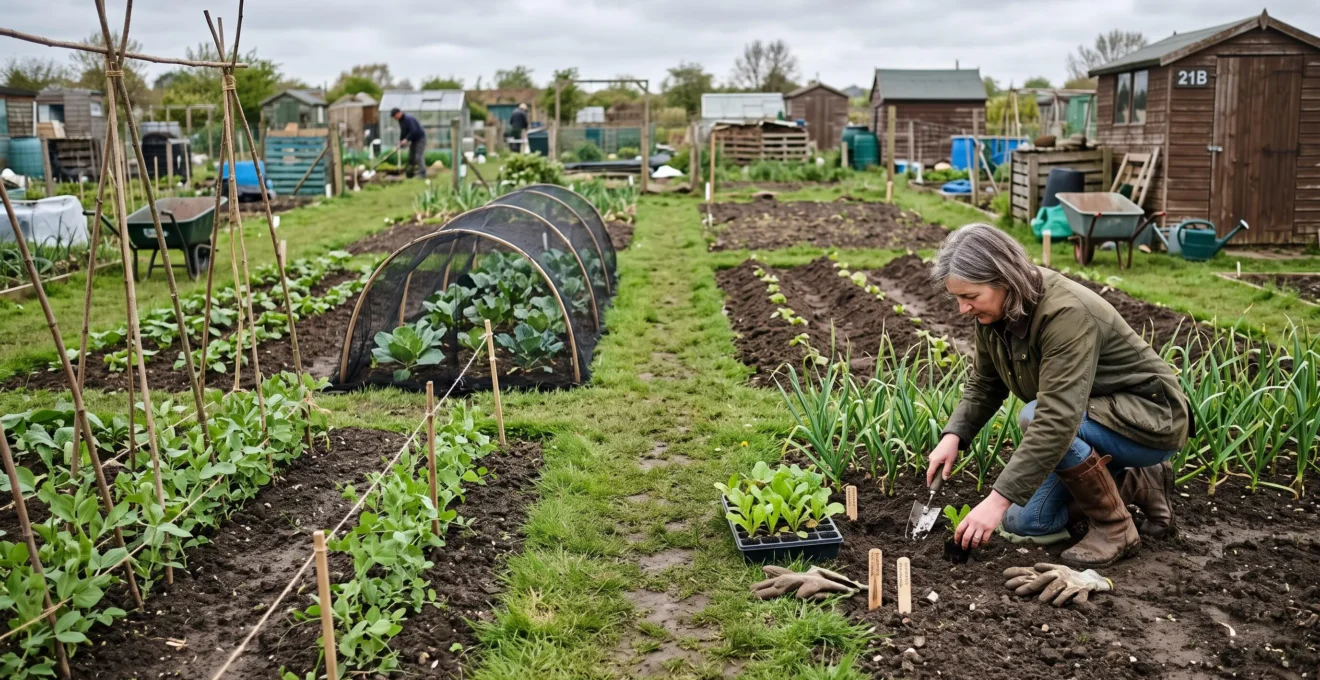
Crop rotation reduces vegetable diseases by interrupting the relationship between susceptible plants and the pathogens that survive around their roots or in crop residues. Moving vegetable families between beds also helps balance nutrient demands and prevents certain pests from finding their preferred hosts in the same location every season.
However, a 75% reduction in disease over a three-year cycle is not an established universal result. The effectiveness of rotation depends on the diseases present, their survival mechanisms, local growing conditions and the gardener’s ability to prevent reinfection.
For British gardeners experiencing smaller potato harvests, struggling cabbages or increasingly unreliable onion crops, the solution may begin with changing where vegetables grow rather than applying more fertiliser. A planned sequence of crops, supported by organic matter, careful observation and good garden hygiene, can address problems that repeated cultivation allows to accumulate. The aim is to maintain productive soil while preventing each season’s difficulties from becoming the next season’s starting conditions.
Crop rotation essentials for healthier vegetable harvests
- Rotate vegetable families rather than individual varieties to interrupt host-specific pest and disease cycles.
- Use a four-bed, four-year rotation where space permits, extending the interval for persistent soilborne diseases.
- Combine rotation with garden hygiene, appropriate soil management and weekly crop inspections, rather than expecting a guaranteed percentage reduction in disease.
- Why Must Brassicas, Legumes, Alliums, and Solanaceae Rotate Rather Than Repeat Locations?
- How to Design a Four-Bed Crop Rotation System for Year-Round UK Vegetable Production?
- Should You Follow Strict Crop Rotation Rules or Adapt Them for Small Garden Realities?
- The Rotation-Breaking Habit That Causes Potato Blight to Return Every Single Season
- When Should You Map and Record Crop Positions to Maintain Effective Long-Term Rotation?
- When Should You Begin Crop Monitoring Records to Identify Slow-Developing Problems?
- Why Do Raised Garden Beds Allow Sowing 3-4 Weeks Earlier Than Ground-Level Soil?
- How Does Weekly Crop Monitoring Prevent 80% of Harvest Losses Before Damage Becomes Severe?
Why Must Brassicas, Legumes, Alliums, and Solanaceae Rotate Rather Than Repeat Locations?
Brassicas, legumes, alliums and Solanaceae benefit from rotation because successive crops belonging to the same family can support the same pathogens, attract similar pests and place repeated demands on soil nutrients. Changing plant families removes suitable hosts for certain harmful organisms while distributing nutrient requirements more evenly across the vegetable garden.
Crop rotation addresses three distinct mechanisms of declining vegetable productivity:
- Host-specific soilborne pathogens: clubroot affects brassicas, while onion white rot threatens onions, garlic and related crops. Growing susceptible plants repeatedly gives these organisms further opportunities to reproduce.
- Recurring pest populations: pests such as carrot flies and onion flies can overwinter locally. Moving susceptible crops may interrupt their access to emerging host plants, although flying adults can still reach nearby beds.
- Unbalanced nutrient demands: repeated cultivation of vegetables with similar nutritional requirements increases the risk of particular deficiencies unless nutrients are adequately replenished.
The botanical family matters more than the crop’s appearance. Potatoes, tomatoes, peppers and aubergines all belong to the Solanaceae. Replacing potatoes with tomatoes is therefore not an effective family break for diseases shared by both crops. Peppers and aubergines may be positioned more flexibly where relevant disease risks are low.
The RHS crop rotation advice supports annual changes in vegetable group placement to manage fertility and reduce pest and disease build-up. It does not establish a standard 75% reduction in disease. Initial pathogen populations, soil characteristics, rainfall, volunteer plants and external infection sources influence the outcome.
Rotation must also account for the pathogen’s soil persistence window, meaning the period during which it can survive without a susceptible crop. Clubroot and onion white rot can remain viable considerably longer than a conventional three-year rotation. Affected beds require extended exclusion of susceptible crops and precautions against transferring contaminated soil.
Once the relevant families and disease risks have been identified, the next task is to translate those relationships into a practical sequence that maintains both soil condition and harvest continuity.
How to Design a Four-Bed Crop Rotation System for Year-Round UK Vegetable Production?
Design a four-bed crop rotation by assigning legumes, brassicas, potatoes and other relevant Solanaceae, and roots with alliums to separate growing areas. Move each group to a different bed annually, allowing legumes to precede brassicas while accommodating overwintering vegetables, seasonal sowing opportunities and the disease history of each bed.
The following rotation follows the four-year sequence recommended by the Royal Horticultural Society. Each bed progresses through the same groups, but begins at a different point in the cycle.
| Growing bed | Year 1 | Year 2 | Year 3 | Year 4 |
|---|---|---|---|---|
| Bed A | Legumes | Brassicas | Potatoes and Solanaceae | Roots and alliums |
| Bed B | Brassicas | Potatoes and Solanaceae | Roots and alliums | Legumes |
| Bed C | Potatoes and Solanaceae | Roots and alliums | Legumes | Brassicas |
| Bed D | Roots and alliums | Legumes | Brassicas | Potatoes and Solanaceae |
Peas and beans contribute to nitrogen cycling through their association with nitrogen-fixing bacteria. Healthy roots and retained plant residues can benefit subsequent crops, including nitrogen-demanding brassicas. However, harvesting legumes removes nutrients too, so this sequence does not eliminate the need for appropriate soil amendments.
Across much of the UK, vegetable sowing and planting opportunities extend from spring into autumn, broadly covering March to October depending on the crop and local conditions. Autumn-planted garlic, overwintering broad beans and winter brassicas can bridge growing seasons. Assign these crops according to their actual bed occupancy rather than assuming every bed becomes vacant in January.
Use a floating crop rule for lettuce, courgettes, sweetcorn and other vegetables outside the main rotation groups. Place them in suitable gaps, record their families and avoid repeatedly assigning them to the same convenient corner.
When previous crop positions are uncertain, establish the first year’s arrangement using available observations rather than assigning beds blindly.
| Previous observation | Initial planting decision |
|---|---|
| Brassicas with swollen, distorted roots | Investigate suspected clubroot and allocate a non-brassica crop. |
| Onions with rotting bases and suspected white rot | Exclude susceptible alliums pending identification. |
| Potato volunteers emerging in spring | Remove remaining tubers and assign an unrelated crop. |
| Possible nutrient deficiency or unsuitable soil pH | Use soil testing to guide amendments and crop selection. |
| No reliable planting or disease history | Establish a recorded starting arrangement and monitor crop performance. |
Routine fertility testing can inform soil preparation, but it should not be mistaken for confirmation that soil is free from specific pathogens.
The sequence provides a useful foundation rather than an obligation to grow unsuitable vegetables in unsuitable conditions. Smaller gardens often need a more flexible interpretation.
Should You Follow Strict Crop Rotation Rules or Adapt Them for Small Garden Realities?
Follow strict crop rotation where space and growing conditions permit, but adapt the arrangement when a small garden cannot accommodate four independent beds. Prioritise separation for crops with known disease problems, particularly brassicas, potatoes and alliums, while allowing greater flexibility for lower-risk vegetables where no recurring family-specific problems have been observed.
A compact kitchen garden may contain permanent rhubarb plants, asparagus crowns, narrow raised beds and a single sunny area suitable for tomatoes. Forcing every vegetable into an identical rotation can create growing conditions that are worse than those the system was intended to improve.
Moving tomatoes into a shaded bed simply to maintain the sequence, for instance, may compromise growth and ripening. Where disease pressure is low, preserving a suitable microclimate may be the better decision.
The appropriate compromise depends on which limitation matters most.
| Garden constraint | Practical adaptation | Important limitation |
|---|---|---|
| One large raised bed | Divide the bed into recorded family-based growing zones. | Shared soil limits separation from soilborne pathogens. |
| Limited sunny growing space | Grow tomatoes or other suitable crops in containers with clean growing medium. | Containers require additional watering and nutrient management. |
| Permanent perennial vegetables | Keep asparagus and rhubarb outside the annual rotation. | Reserve sufficient space for annual crops. |
| Confirmed persistent soilborne disease | Exclude susceptible crops from affected soil. | A short rotation or movement within the same bed may be inadequate. |
Rotating small zones within a bed is primarily an organisational compromise, not a proven equivalent to rotating independent plots. Where persistent pathogens are present, roots, water and cultivation practices can connect apparently separate areas.
Containers provide a more distinct growing environment when filled with suitable uncontaminated material and protected against soil transfer. Reserve this limited container space for crops facing the greatest combination of disease pressure and location constraints.
Flexibility remains useful only when the reason for moving a crop is understood. Potato late blight illustrates why some disease risks cannot be managed through bed changes alone.
The Rotation-Breaking Habit That Causes Potato Blight to Return Every Single Season
Leaving potato tubers behind after harvesting is a rotation-breaking habit that can preserve a local source of late blight infection. Planting potatoes or susceptible tomatoes repeatedly in affected ground can also undermine disease management. Neither habit, however, explains every annual outbreak, because late blight frequently arrives through airborne spores from outside the garden.
Potato late blight is caused by Phytophthora infestans, an oomycete capable of infecting both potatoes and tomatoes. Damp foliage and warm, wet weather favour infection and rapid disease development, making periods of humid summer weather particularly concerning for UK growers.
An infected tuber missed during harvesting may survive underground and produce a volunteer potato plant the following spring. If that plant develops blight, it can become a source of infection for susceptible crops elsewhere in the garden.
According to the RHS advice on potato blight, airborne infection from other gardens, allotments and commercial crops accounts for most garden outbreaks. The organisation nevertheless recommends a rotation interval of at least four years to address potential infection from persistent soilborne resting spores, with tomatoes excluded from affected soil during that period.
Blighted foliage placed in a domestic compost heap may also present a risk if resilient resting spores are present. Dispose of infected material through appropriate alternatives to home composting, following local waste collection guidance.
Five checks to identify potential sources of recurring potato blight
- Inspect last season’s potato beds and remove volunteer plants with their tubers, recording cleared locations on the garden map.
- Review previous potato and tomato positions and mark affected beds together with their planned exclusion periods.
- Check composting and crop waste areas for discarded potato tubers or suspect infected material, recording any material requiring alternative disposal.
- Review seed potato purchases and retain packaging or supplier details confirming the planting material’s origin.
- Observe nearby potato and tomato crops where possible, recording visible suspected outbreaks and their dates as potential external infection sources.
This audit distinguishes preventable local sources from exposure that cannot be controlled through rotation. Clean planting material and careful garden hygiene reduce avoidable risks, but neither guarantees protection against airborne blight.
Effective disease management depends on knowing what occupied each bed and which infection routes remained open. That information becomes increasingly difficult to reconstruct without written records.
When Should You Map and Record Crop Positions to Maintain Effective Long-Term Rotation?
Map crop positions in late winter, before ordering seeds and allocating space for spring planting. Keep the previous season’s layout alongside the new plan, identify vegetable families rather than varieties alone, and update the map whenever actual planting changes. This prevents unintentional repetition and preserves the disease history of each bed.
Planning before the growing season allows decisions to be made while the previous harvest remains reasonably fresh in memory. It also prevents seed purchases from determining crop placement before suitable rotation positions have been identified.
A useful system requires little more than a notebook, consistent bed names and one sketch for each growing year. The Royal Horticultural Society recommends planning rotation before the season begins and identifying growing areas before planting.
Draw the permanent boundaries first. Label annual growing beds, containers and perennial areas. Within each bed, record the intended vegetable family, approximate planting period and any overwintering crop that will remain when the next season begins.
Maintain a short accompanying record containing the following information:
- Crop name, botanical family and growing location.
- Planting and final clearance dates.
- Observed symptoms, suspected diseases and confirmed diagnoses.
- Soil amendments and notable drainage or fertility problems.
- Changes made to the original planting plan.
The principal risk of relying on memory is silent family drift. A gardener might remember moving cabbages but overlook the kale planted in their former location, or replace potatoes with tomatoes without recognising their shared susceptibility to certain diseases.
Over several growing seasons, these seemingly minor substitutions can shorten the intended host-free interval. Recording actual planting positions, rather than preserving only the original plan, makes such changes visible.
A planting map establishes where vegetables grew. Adding observations of their condition throughout the season reveals whether those locations are becoming healthier or developing persistent problems.
When Should You Begin Crop Monitoring Records to Identify Slow-Developing Problems?
Begin crop monitoring records before the first signs of disease, ideally during the initial season of a planned rotation. Establish a baseline describing soil condition, existing weeds, previous disease observations and early crop growth. Subsequent records can then distinguish newly developing problems from recurring symptoms or longstanding limitations in a particular bed.
The first record does not need to contain a diagnosis. Its purpose is to describe the starting conditions against which later changes can be assessed. Note whether soil is compacted, poorly drained or difficult to cultivate, and whether previous harvests contained unusually small or damaged vegetables.
Once seedlings establish, record what healthy growth looks like for each crop. University of Florida IFAS Extension guidance emphasises familiarity with normal plant appearance as a foundation for recognising abnormalities during regular inspections.
Retain entries stating that no unusual symptoms were observed. These records are valuable because they help establish when visible problems first appeared, rather than merely documenting the date on which damage became serious. An absence of symptoms does not, however, prove that a pathogen is absent from the soil.
Hypothetical example: identifying a recurring problem in one vegetable bed
A gardener records slow-growing brassicas in Bed A during the first season, followed by disappointing growth in another crop in the same bed the following year. The records identify the location as a recurring concern, but they do not establish a common cause. Investigating drainage, soil fertility and root symptoms helps determine whether the rotation interval needs changing or whether the bed requires a different form of soil management.
Repeated symptoms across two seasons provide a practical reason to investigate, not a scientifically validated threshold for extending a rotation. Confirmed persistent diseases justify changes based on the organism involved rather than the number of entries in a notebook.
These observations become particularly useful when comparing growing environments, including raised beds that may offer earlier planting opportunities but introduce different moisture and temperature conditions.
Why Do Raised Garden Beds Allow Sowing 3-4 Weeks Earlier Than Ground-Level Soil?
Raised garden beds can permit earlier spring sowing because improved drainage and suitable growing soil help them become workable and warm more readily than poorly drained ground-level beds. A three-to-four-week advantage is possible as a garden-specific expectation rather than a guaranteed interval, and should be verified against soil temperature, crop requirements and frost risk.
Waterlogged ground often remains cold and difficult to cultivate after a wet British winter. Heavy clay soils are particularly susceptible to slow drainage. Raising the growing surface and using a freely draining soil mixture can improve conditions for spring root growth and seed establishment.
Temperature gains also depend on bed height, exposure to sunlight, wind, rainfall and the properties of the growing medium. The relative importance of excess moisture and air temperature varies, so improved drainage should not be treated as the sole explanation for earlier warming.
The RHS advice on making raised beds identifies warmer spring soil, improved drainage and easier installation of protective covers as potential benefits. It does not establish a fixed three-to-four-week extension of the sowing season.
During March, compare a raised bed with a nearby ground-level growing area using a soil thermometer. Take readings at comparable depths and times of day, repeat the observations under changing weather conditions, and compare the results with the germination requirements of the intended vegetables.
An earlier usable growing window can make crop rotation easier on a small plot. Suitable early vegetables may occupy a bed before its main seasonal crop, provided their botanical families and clearance dates remain compatible with the rotation.
Earlier sowing introduces additional risks. Late frosts can damage emerging seedlings, while damp conditions may favour slug activity. Protective fleece, appropriate slug management and staggered sowings reduce dependence on a single early planting date. Raised beds also require attention to moisture as conditions become warmer and drier.
Earlier establishment is valuable when the resulting plants remain healthy. Regular inspections help determine whether an extended growing season is improving productivity or simply exposing vulnerable seedlings to additional stress.
Key points to remember
- Choose disease-management intervals according to pathogen persistence, particularly when a problem survives longer than the standard rotation.
- Treat soil temperature, drainage and crop suitability as planting conditions to verify rather than assumptions attached to a calendar date.
- Use dated observations to investigate whether declining crop performance follows a vegetable family, remains associated with one bed or coincides with wider environmental conditions.
How Does Weekly Crop Monitoring Prevent 80% of Harvest Losses Before Damage Becomes Severe?
Weekly crop monitoring helps prevent avoidable harvest losses by shortening the interval between the appearance of a problem and an appropriate response. Although an 80% reduction in harvest losses is not established by the available guidance, regular inspections can reveal pests, disease symptoms and environmental stress before damage becomes widespread or difficult to reverse.
The practical advantage of monitoring is the opportunity to intervene while a problem remains limited. A small pest population, an emerging nutrient deficiency or the first signs of disease may require a different response from extensive damage affecting an entire bed.
The University of Florida Extension advice on garden pest scouting recommends inspecting food crops at least weekly and whenever abnormal growth appears. Although its guidance originates in a different climate, the principles of routine observation, early identification and proportionate intervention are applicable to British vegetable gardens.
Follow a consistent inspection route through the growing areas. Examine young shoots, leaf undersides, stems, soil surfaces and garden boundaries rather than judging plant health from the path alone.
| Problem category | Early warning signs | Appropriate response |
|---|---|---|
| Pest damage | Feeding holes, distorted shoots, eggs or visible insects | Identify the organism before selecting suitable physical, biological or other controls. Act promptly when vulnerable seedlings are threatened. |
| Disease symptoms | Expanding leaf lesions, unusual wilting, stem damage or root distortion | Investigate the cause, avoid spreading potentially infected material and apply disease-specific management guidance. |
| Nutrient or water stress | Discolouration, uneven growth, persistent wilting or poor establishment | Check soil moisture, drainage and fertility before changing watering practices or applying amendments. |
A weekly schedule is a minimum routine rather than a suitable interval for every situation. Young seedlings, rapidly developing infestations and suspected late blight during favourable weather may warrant more frequent attention. The response should reflect the speed at which the problem can cause irreversible damage.
Record the affected crop family, bed, symptoms, date and action taken. Where a soilborne disease is identified, use that information to reconsider the planned return of susceptible crops. Early detection may reduce further spread, but it cannot guarantee elimination of an established persistent pathogen.
This is how monitoring reinforces crop rotation: it provides evidence that the planned sequence is working, or identifies the circumstances in which the sequence needs to change.
Start by drawing the current vegetable garden, marking the families grown in each bed and setting aside a regular time for inspection. Use the resulting records to plan the next growing season, extend disease-specific exclusion periods where necessary and make soil improvements based on observed conditions rather than assumptions.
Does adding fresh compost remove the need for crop rotation?
No. Mature, suitable compost can improve soil condition and contribute nutrients, but it does not reliably eliminate persistent soilborne pathogens or interrupt their access to susceptible plants. Compost application and crop rotation address different aspects of soil management and are most useful when combined.
Do green manures need to be included in a vegetable rotation?
Yes. Include green manures according to their botanical families and disease implications. Mustard belongs to the brassica family, for example, while clovers and vetches are legumes. Growing a susceptible green manure during a planned disease break may undermine the purpose of that interval.
Can different vegetable families grow together in a single rotating bed?
Yes. Intercropping can be compatible with rotation if every relevant plant family is recorded. The important consideration is whether any companion crop provides a suitable host for a pathogen that the rotation is intended to suppress. Mixed planting should not obscure the actual disease history of the bed.
Should garden tools be cleaned when moving between vegetable beds?
Cleaning soil from tools and footwear is particularly important when persistent soilborne diseases are suspected or confirmed. Moving contaminated soil between beds can undermine the separation achieved through rotation. Work unaffected areas before affected ones where practical, and follow disease-specific hygiene guidance.
Can a vegetable garden remain productive without a full four-year rotation?
A shorter or flexible rotation may remain productive where disease pressure is low and fertility is managed appropriately. However, productivity in previous seasons does not establish that future disease risks are absent. Persistent infections may require considerably longer exclusion periods, alternative growing locations or suitable containers with uncontaminated growing medium.