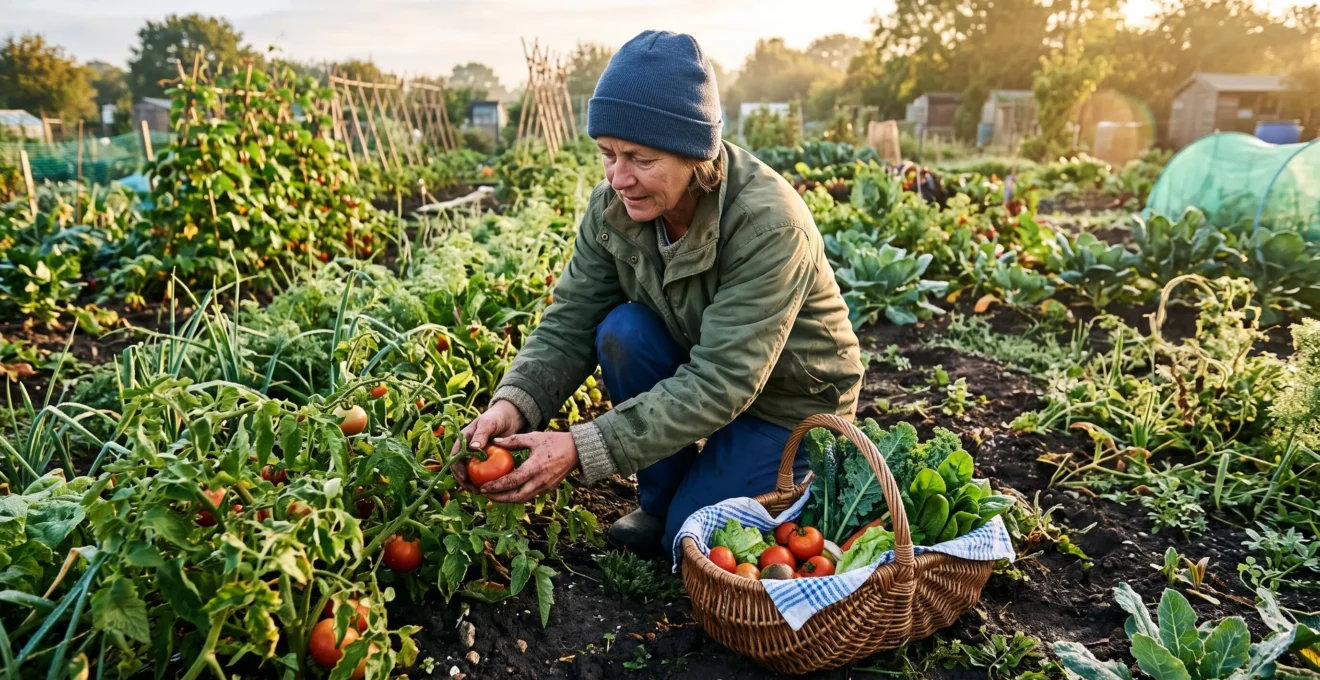
A tomato picked when it is ready to eat can deliver a different experience from one harvested early for transport. Its aroma, sweetness and texture reflect its stage of maturity, while the time between harvesting and eating affects how much quality remains. For home gardeners, controlling these two factors is one of the biggest advantages of growing vegetables.
But does freshly harvested produce really contain 40% more nutrients than shop-bought vegetables? That precise figure is not established by the horticultural sources considered here. Nutrient differences depend on the vegetable, variety, ripeness, growing conditions, storage temperature and specific vitamin or mineral being measured. A universal percentage would therefore be misleading.
The practical advantage is more defensible: harvesting at the appropriate maturity, protecting produce from heat and choosing suitable storage conditions can preserve flavour, texture and nutritional quality. For a UK gardener who usually picks vegetables whenever convenient, a few changes to harvesting habits can make a noticeable difference to the food reaching the plate.
How to get the best from every harvest
- Pick leafy vegetables during the cool morning whenever possible, but judge tomatoes, beans and courgettes primarily by their individual maturity signs.
- Move harvested produce into shade promptly and store each crop according to its sensitivity to chilling, moisture loss and decay.
- Use succession sowing and appropriate cold-season varieties to harvest vegetables at their best rather than picking everything at once.
- Why Should You Harvest Fresh Produce in Early Morning Rather Than Midday or Evening?
- How to Judge Perfect Harvest Timing for Tomatoes, Courgettes, and Beans That Stop Developing Once Cut
- Should You Refrigerate Fresh Produce Immediately or Store Some Vegetables at Room Temperature?
- The Fresh Produce Storage Mistake That Causes Rot Within 3 Days of Harvest
- When Should You Sow Follow-On Crops to Maintain Fresh Produce Supply Throughout Summer?
- Why Harvesting in Early Morning Beats Midday or Evening for Flavour and Keeping Quality
- Why Do Kale, Parsnips, and Brussels Sprouts Taste Sweeter After Frost?
- Which Hardy Cool-Weather Vegetables Thrive in UK Springs and Autumns When Others Fail?
Why Should You Harvest Fresh Produce in Early Morning Rather Than Midday or Evening?
Early morning is often the best time to harvest lettuce, leafy greens and tender herbs because plants have generally recovered water overnight and their tissues are cooler and firmer. Midday heat can increase water loss and wilting, while evening picking may leave crops carrying accumulated warmth. However, prompt cooling and correct handling can matter more than the exact hour.
During daylight, plants lose water through transpiration. On warm or windy days, water loss may temporarily exceed the roots’ ability to replace it, reducing the internal pressure that keeps leaves and stems crisp. Overnight, reduced transpiration and continued water uptake allow many plants to recover their turgor pressure.
This explains why freshly picked lettuce often feels firmer at the start of the day. The RHS guide to growing and harvesting lettuce recommends morning harvesting while the leaves are fresh and juicy. In hot weather, it also advises placing individual harvested leaves directly into water to help prevent wilting.
Not every vegetable responds equally to the time of picking. Use the following comparison to decide where morning harvesting deserves priority.
| Crop group | Morning harvest priority | Practical reason |
|---|---|---|
| Lettuce, spinach and tender salad leaves | High | Leaves lose firmness quickly when exposed to heat and dry air. |
| Parsley and other tender herbs | High | Delicate tissues are vulnerable to wilting and moisture loss. |
| Soft fruit | Often useful | Cooler fruit may be easier to handle, provided it is dry and protected from damage. |
| French beans and courgettes | Useful but secondary | Development stage and prompt protection from heat remain essential. |
| Tomatoes | Lower | Ripeness, flavour development and careful handling are generally more important than picking at dawn. |
| Storage roots | Usually lower | Maturity, avoiding damage and suitable storage conditions take priority. |
The nutritional argument involves more than water content. After harvest, living plant tissues continue respiring, consuming stored carbohydrates and releasing heat. Temperature affects the rate of these processes, while certain nutrients are sensitive to storage duration and handling conditions. Picking during hot weather without cooling can therefore accelerate quality losses.
Morning harvesting is not an automatic nutritional guarantee. Water-soluble compounds, sugars and vitamin concentrations can change throughout the day in crop-specific ways. There is no sound basis here for assigning a fixed percentage advantage to morning-picked vegetables.
Most importantly, shade the harvest immediately. Lettuce collected at 8am and abandoned in direct sunlight may deteriorate faster than lettuce picked later and cooled correctly.
Once the hour of harvest is chosen, the next decision is whether the vegetable itself has reached the right stage for eating.
How to Judge Perfect Harvest Timing for Tomatoes, Courgettes, and Beans That Stop Developing Once Cut
Tomatoes, courgettes and French beans require different ripeness tests. Mature tomatoes can continue ripening after harvest, whereas courgettes and beans cannot develop further once detached. Pick tomatoes according to their colour and intended use, harvest courgettes while tender, and collect beans before their pods become tough or their seeds overly developed.
The distinction begins with plant physiology. Tomatoes are climacteric fruit: once sufficiently mature, they can continue ripening through changes associated with ethylene production and respiration. Courgettes and French beans are non-climacteric crops and do not undergo comparable post-harvest ripening.
For these vegetables, harvest maturity is therefore not the same thing as botanical maturity. A fully mature courgette with developed seeds is generally less desirable for tender cooking than a younger one.
Three ripeness tests you can use without equipment
- Tomatoes: Look for the characteristic colour of the variety, including yellow or dark-fruited types. A ripe tomato should feel firm but may yield slightly to gentle pressure. Check its shoulder and avoid squeezing hard enough to bruise it.
- Courgettes: Choose well-formed, glossy fruit while the skin remains tender and the seeds are still immature. Assess size against the variety’s normal eating stage rather than relying on length alone.
- French beans: Inspect the pod’s outline. Pods intended for eating whole are generally best before large seeds become prominent. A tender pod should bend and snap cleanly rather than feel fibrous.
Harvesting too late can reduce eating quality, but harvesting earlier is not automatically better either. Immature tomatoes may never develop the flavour of fruit allowed to reach sufficient physiological maturity. Conversely, beans and courgettes deliberately harvested young can be excellent eating crops but need careful handling because their tissues remain tender.
Should tomatoes ripen completely on the plant?
For immediate eating, allowing healthy tomatoes to develop their characteristic ripe colour on the plant is a useful flavour-focused approach. However, leaving every fruit until fully ripe increases exposure to splitting, pests, rain damage and accidental losses.
A practical alternative is staged picking. Leave some tomatoes to ripen on the vine for immediate use, while harvesting others once they have reached sufficient maturity and started changing colour, particularly when poor weather threatens.
The UC Davis tomato postharvest fact sheet explains the role of ethylene in initiating ripening in mature-green tomatoes and describes the influence of temperature on subsequent quality.
18–21°C
The standard tomato-ripening temperature range described by UC Davis. This is a ripening guideline, not a guaranteed optimum for every variety or household.
University of California, Davis, Postharvest Research and Extension Center.
Storage life also depends on the crop and harvest stage. A suitably mature tomato can continue developing off the vine, while an overdeveloped bean pod will not become tender again. Harvesting early merely to extend shelf life is therefore an unreliable rule.
After harvesting at the appropriate stage, the next priority is choosing conditions that preserve that quality rather than inadvertently damaging it.
Should You Refrigerate Fresh Produce Immediately or Store Some Vegetables at Room Temperature?
Refrigerate most leafy greens and other cold-tolerant, highly perishable vegetables promptly, but avoid automatically putting every harvest into a domestic fridge. Tomatoes generally keep better at moderate temperatures, while courgettes and cucumbers are sensitive to prolonged chilling. Storage decisions should account for temperature, humidity, crop maturity and how soon the produce will be eaten.
Freshly harvested vegetables remain biologically active. Their cells continue consuming stored energy through respiration, and their tissues gradually lose water. Cooling slows many of these processes, which is why refrigeration can extend the usable life of suitable crops.
However, some vegetables experience chilling injury when exposed to temperatures above freezing but below their physiological tolerance. Symptoms can include surface pitting, discolouration, abnormal softening, poor flavour development and increased susceptibility to decay.
Tomatoes offer a clear example. The UC Davis technical guidance describes chilling injury after sufficiently prolonged exposure to low temperatures, including storage below 10 °C. Damage depends on both temperature and duration, so a brief period in the fridge is not equivalent to prolonged cold storage.
A practical approach for a UK household is to divide produce into three groups.
| Storage group | Examples | Recommended approach |
|---|---|---|
| Cold-tolerant, perishable | Lettuce, spinach, kale and tender herbs | Refrigerate promptly, protecting leaves from drying out while avoiding stagnant surface moisture. |
| Chill-sensitive | Tomatoes, courgettes, cucumbers and many tender beans | Prefer suitable cool storage above chilling-injury temperatures where practical; refrigerate selectively when short-term preservation requires it. |
| Storage-flexible or condition-dependent | Carrots, beetroot, potatoes, onions and garlic | Choose according to crop: roots often benefit from cool, humid conditions; cured onions and potatoes require appropriate dry, dark or ventilated storage rather than identical fridge treatment. |
The third category does not mean every vegetable has interchangeable storage requirements. For example, a freshly harvested carrot with its leaves attached behaves differently from a properly cured onion. Remove leafy tops from suitable storage roots to limit moisture loss, while allowing onions and garlic intended for longer storage to dry adequately before putting them away.
Temperature is only part of the equation. Leafy vegetables generally require protection from water loss, while produce with wet surfaces or wounds needs conditions that discourage decay. Containers should balance humidity retention with suitable airflow.
Ethylene also influences storage. Ripening tomatoes and other ethylene-producing fruit can accelerate ageing or yellowing in certain sensitive vegetables. Keeping susceptible leafy greens away from substantial ethylene sources is sensible, especially during longer storage.
Finally, distinguish a genuinely cool room from a hot kitchen. A shaded, ventilated space may be suitable for short-term tomato storage, but a warm windowsill in summer is not a substitute for controlled storage.
Even when the temperature is appropriate, a separate handling mistake can shorten the life of otherwise healthy vegetables dramatically.
The Fresh Produce Storage Mistake That Causes Rot Within 3 Days of Harvest
Sealing damp, damaged vegetables inside an airtight bag is a common way to accelerate post-harvest decay. Surface moisture, bruising and insufficient ventilation can encourage microbial growth, sometimes leading to visible spoilage within a few days. The precise timing varies, but sorting damaged produce, controlling moisture and choosing appropriate packaging are effective preventive habits.
Water inside a vegetable helps it remain crisp. Free moisture sitting on its surface is different: prolonged wetness, especially around wounds or damaged skin, can create favourable conditions for fungi and bacteria.
Imagine a hypothetical harvest of beans placed into a tightly closed bag while still wet, alongside several bruised pods. If the bag remains warm, condensation can accumulate and damaged areas may deteriorate. The same beans, handled dry, cooled appropriately and stored in suitable packaging, would face different conditions.
This does not mean all vegetables should be stored uncovered. Tender greens can rapidly wilt in excessively dry refrigerated air. The goal is to retain useful humidity without trapping persistent surface water.
Five steps to protect your harvest
A practical five-point harvest care checklist
- Check surface conditions: Harvest suitable vegetables when dry where possible, and make a separate pile for wet produce. Result: a basket with visibly dry produce identified for storage.
- Inspect every item: Separate bruised, split, pest-damaged or diseased vegetables. Result: a clearly identified use-first group.
- Sort by storage requirements: Divide cold-tolerant, chill-sensitive and curing crops. Result: three appropriate storage groups.
- Choose suitable packaging: Use ventilated or moisture-managing containers appropriate to the crop, avoiding pooled water and excessive drying. Result: produce stored without visible condensation or exposed wilting leaves.
- Schedule an inspection: Check stored vegetables regularly, removing spoiled items promptly. Result: a storage batch without visibly rotting produce.
For most sound, unwashed vegetables intended for storage, delaying washing until preparation helps avoid unnecessary surface moisture. However, visibly dirty or contaminated produce needs safe handling, and ready-to-eat leafy crops that have been washed should be properly drained or dried and refrigerated promptly.
Some crops also need curing. Mature storage onions and garlic benefit from suitable drying conditions, while mature winter squash may require crop-specific curing. Young courgettes intended for tender eating are not interchangeable with fully mature storage squash and should not be cured using the same approach.
One spoiled vegetable can affect its neighbours through direct microbial contact and local moisture accumulation. Ethylene can also influence ripening or senescence in susceptible produce, but it is not itself the organism responsible for rot.
Pay particular attention to vegetables with frost damage, harvest cuts or cracked skins. These are better candidates for prompt use than for extended storage. Discard produce showing unsafe spoilage rather than cutting away extensive soft or mouldy areas and assuming the remainder is sound.
Protecting a single harvest is valuable, but a more reliable way to keep eating high-quality vegetables is to avoid producing the entire crop at the same moment.
When Should You Sow Follow-On Crops to Maintain Fresh Produce Supply Throughout Summer?
Sow small batches of suitable vegetables at intervals throughout the growing season so that each crop reaches harvest maturity when it is needed. For UK gardeners, repeated sowings every two to three weeks are a useful starting point for salads, beans and other quick crops, but weather, variety and available growing time should determine the final schedule.
Succession sowing works best when planned backwards from the kitchen rather than forwards from a seed packet. Decide when the household wants fresh lettuce, carrots or beans, estimate how long the selected variety takes to reach harvest under local conditions, and schedule sowing accordingly.
This changes harvesting from an occasional response to ripe produce into a planned supply system.
The RHS advice on succession sowing recommends small repeated sowings, commonly two to three weeks apart, to provide continuous harvests. Its guidance identifies carrots, French beans, peas, salads and spinach among suitable crops.
2–3 weeks
A typical interval between small successive sowings of suitable vegetables. Actual timing should change with germination conditions, crop development and the household’s requirements.
Royal Horticultural Society, Successional Sowing.
Choose between two succession strategies
Strategy one: repeated small sowings. Sow modest quantities of quick-growing vegetables at intervals rather than planting an entire packet at once. This suits crops such as loose-leaf lettuce, radishes, carrots and French beans when growing conditions permit.
Strategy two: varieties with different maturity periods. Grow early, maincrop and later-maturing cultivars where appropriate. This can spread harvesting over a longer period without relying entirely on frequent sowing sessions. Carrots can be managed through both methods, depending on the varieties and available space.
Some longer-producing crops, including courgettes, cucumbers and runner beans, may also be grown in more than one batch to support production later in the season.
The important limitation is that sowing intervals do not translate perfectly into harvest intervals. A later sowing growing through warm weather can catch up with an earlier sowing exposed to cooler conditions. Conversely, heat and dry soil can interfere with germination, while some leafy crops are more prone to bolting under stressful conditions.
Late-summer sowing also requires a realistic assessment of the remaining growing season. A crop that needs substantial warmth to mature may struggle if sown too late, especially in colder UK regions. Salad crops selected for autumn conditions may be more suitable than another warm-season bean sowing.
For a hypothetical household eating two small bowls of salad each week, several modest batches could be more useful than one large sowing. The objective is not to maximise the number of plants, but to have a manageable quantity ready at the ideal eating stage.
A steady supply also makes it easier to pick vegetables at their best time of day instead of rushing to rescue an oversized crop.
Why Harvesting in Early Morning Beats Midday or Evening for Flavour and Keeping Quality
Morning harvesting often gives tender vegetables a texture advantage because their tissues have recovered moisture overnight and have not yet accumulated the day’s heat. This can improve crispness and reduce immediate wilting. However, early morning is not consistently the sweetest harvesting time for every crop, and careful handling can preserve much of the advantage when later picking is unavoidable.
The most dependable difference is related to turgor and produce temperature. Hydrated leaves and young pods tend to be firmer, while produce harvested during intense heat may start its storage life warmer and more prone to rapid water loss.
Morning harvesting can therefore be particularly useful for leafy salads and herbs. In contrast, fruit sweetness is influenced by photosynthesis, stored carbohydrates, maturity and daily metabolism. Plants do not universally convert enough starch into sugars overnight to make every vegetable sweeter at dawn.
For some crops, soluble sugar levels can even follow daily patterns that favour later harvesting. Treat claims of consistently higher morning sugar content as crop-dependent rather than as a general scientific rule.
What about harvesting in the evening?
Evening can be a sensible alternative, particularly once the temperature has fallen and direct sunlight has weakened. It may be preferable to harvesting during a hot afternoon, especially for gardeners who cannot visit their allotment before work.
But produce collected while still warm may require more cooling than crops harvested at a cooler time. After picking, respiration continues, and elevated temperature generally accelerates metabolic activity.
An evening harvest should therefore be handled according to the vegetable’s storage needs rather than being left overnight in a warm container.
How to preserve freshness when you cannot pick at dawn
- Choose a cooler part of the day whenever practical, avoiding prolonged harvesting in direct midday sun.
- Use clean containers and keep them in shade rather than on hot paving or exposed soil.
- Transfer leafy greens promptly into an appropriate cool environment.
- For suitable leafy vegetables, use clean cool water when necessary to reduce wilting, then drain and manage surface moisture before storage.
- Keep tomatoes and other chill-sensitive vegetables out of unnecessarily prolonged refrigeration.
The texture test is straightforward: a hydrated lettuce leaf feels supported and crisp, while a wilted leaf bends limply. Beans intended for tender eating should similarly feel firm rather than shrivelled.
These observations are useful quality indicators, but neither crispness nor apparent sweetness establishes an exact nutrient concentration. The strongest practical rule is to combine appropriate harvest timing with prompt, crop-specific handling.
Seasonal temperature also influences flavour before vegetables are picked, sometimes making autumn crops taste noticeably different from their summer counterparts.
Why Do Kale, Parsnips, and Brussels Sprouts Taste Sweeter After Frost?
Kale, parsnips and Brussels sprouts can taste sweeter after exposure to cold because low temperatures influence carbohydrate metabolism and, in some conditions, increase soluble sugar concentrations in plant tissues. These sugars can contribute to cold tolerance and alter flavour. The effect varies with crop, variety and temperature, and severe freezing damage should not be mistaken for beneficial cold exposure.
Plants adapted to cool conditions undergo physiological changes as temperatures fall. These may include adjustments in sugar metabolism, accumulation of compatible solutes and changes to cellular processes that support cold acclimation.
Some soluble sugars contribute to cellular protection by influencing osmotic balance and the behaviour of water within tissues. Describing them simply as an antifreeze is a useful analogy, but cold tolerance involves several mechanisms rather than one universal sugar response.
Parsnips are particularly associated with sweeter eating quality after a period of cold weather. Changes in stored carbohydrates can make their flavour more appealing, although maturity and variety also matter.
Brussels sprouts can similarly develop a sweeter flavour in cooler growing conditions. Their final taste also depends on cultivar, maturity and the balance of sugars with naturally occurring bitter compounds.
For kale, the result is less predictable. Certain varieties may develop a milder or sweeter flavour after cold exposure, while others show smaller differences. The intensity and duration of cold matter as much as the occurrence of a visible frost.
When should you harvest after cold weather?
For hardy vegetables that are healthy and well established, allowing them to experience a period of cool autumn or winter conditions can be worthwhile. There is no universal number of frosts required to guarantee maximum sweetness.
Instead, assess the plant and its condition. A crop that remains firm and healthy after light frosts may be suitable for continued harvesting. Waiting through increasingly severe freezing conditions, however, can expose it to unnecessary damage.
| Observation | Interpretation | Harvest response |
|---|---|---|
| Firm, healthy leaves after light frost | The plant has tolerated the cold without obvious tissue injury. | Harvest as needed or continue monitoring. |
| Healthy parsnip roots in cold soil | The crop may benefit in flavour from continued cool conditions. | Lift when required, provided the ground is workable. |
| Persistent blackening or slimy tissue | Potential freezing injury and decay rather than beneficial acclimation. | Do not store damaged tissue as sound produce; discard spoiled material. |
| Repeated freezing and thawing with deterioration | Elevated risk of tissue breakdown and quality loss. | Prioritise sound produce and assess damaged portions carefully. |
There is also a difference between plant survival and good eating quality. A vegetable may tolerate frost yet suffer from waterlogged soil, pests or prolonged exposure before harvest.
The best results come from growing vegetables selected for the conditions in which they will mature, rather than expecting frost to improve crops that cannot tolerate it.
Key takeaways for extending the harvest season
- Choose genuinely frost-tolerant vegetables instead of assuming that every cool-season crop will survive a British winter.
- Plan winter harvesting months ahead: many slow-growing vegetables must establish long before cold weather arrives.
- Protect soil drainage and select appropriate varieties, because winter success depends on more than minimum air temperature.
Which Hardy Cool-Weather Vegetables Thrive in UK Springs and Autumns When Others Fail?
Kale, Brussels sprouts, parsnips, leeks and suitable winter cabbages are reliable choices for extending the UK vegetable harvest into colder months. Hardy winter salads can also contribute, particularly with protection. Success depends on choosing suitable varieties, establishing plants at the right time and managing wet soil, low light and frost exposure.
Hardiness is not a simple yes-or-no characteristic. A plant’s survival depends on its stage of growth, the severity and duration of cold, soil conditions and variety-specific tolerance.
Mature kale may withstand conditions that would damage newly germinated seedlings. A vegetable that tolerates freezing air temperatures can also struggle in saturated soil, especially if roots remain poorly aerated for long periods.
The RHS guide to growing vegetables for winter identifies broccoli, Brussels sprouts, cabbages, kale, leeks and parsnips as hardy crops that can stand through the winter. It also discusses protected overwintering options for leafy vegetables and winter salads.
| Crop | Cold-season suitability | Key consideration |
|---|---|---|
| Kale | Hardy winter staple | Establish plants before winter and harvest healthy leaves progressively. |
| Brussels sprouts | Hardy winter crop | Requires a long growing season and appropriate variety selection. |
| Parsnips | Hardy root crop | Suitable for lifting during colder months when the soil is workable. |
| Leeks | Hardy winter crop | Choose varieties suited to the intended harvesting period. |
| Winter cabbage | Variety-dependent winter hardiness | Use varieties bred for autumn or winter cropping. |
| Corn salad and land cress | Useful cold-season salads | Provide suitable protection when conditions demand it. |
| Chard and rocket | Variable overwintering potential | May need fleece, cloches or another form of protection. |
| Overwintering broad beans | Variety- and site-dependent | Choose suitable autumn-sowing varieties and avoid exposed, waterlogged locations. |
Spring and autumn require different approaches
Early spring sowing starts with young plants exposed to cool soil and variable weather. Germination and establishment may be slow, making appropriate crop choice and protection particularly valuable.
Autumn and winter cropping often requires an earlier start. Slow-growing vegetables intended for winter harvest, including Brussels sprouts and many leeks, are generally started during spring or early summer. Late-summer and autumn sowings are more suitable for selected salads and other crops adapted to shorter growing periods.
Some autumn-sown vegetables can overwinter as established young plants and resume active growth when temperatures and daylight increase in spring. That strategy requires varieties explicitly suitable for overwintering rather than ordinary summer cultivars.
Variety selection is therefore a major part of harvest planning. A summer cabbage and a winter-hardy cabbage are not automatically interchangeable, even though they belong to the same vegetable group.
Protecting the growing environment also matters. Well-drained soil, raised beds where appropriate, and fleece or cloches for vulnerable plants can help reduce losses. Protection should still allow suitable ventilation and be managed to avoid excessive humidity or overheating during milder weather.
The resulting harvest may grow slowly during winter, but it can provide fresh produce when warm-season vegetables have finished. Choosing suitable crops also allows gardeners to use cool weather as part of flavour development rather than treating it only as a threat.
For the next growing season, identify one crop usually harvested too late and one hardy vegetable that could extend the harvest calendar. Record their intended eating dates, choose suitable varieties and plan sowing backwards from those dates. Combine that schedule with attentive harvesting and crop-specific storage to make better use of every harvest.
Is home-grown produce always more nutritious than supermarket vegetables?
No. Home-grown vegetables can offer excellent freshness and allow precise control over harvest maturity, but they are not automatically richer in every nutrient. Variety, growing conditions, maturity, storage duration and preparation all affect nutritional composition. The claim that peak-ripe home-grown produce universally contains 40% more nutrients is not substantiated by the sources used here.
Does washing vegetables immediately after harvesting make them last longer?
Not necessarily. Washing may leave surface moisture that encourages deterioration if produce is packed wet. For many sound vegetables, it is practical to store them unwashed and wash before preparation. If leafy vegetables are washed after harvest, drain or dry them appropriately and refrigerate promptly. Always handle visibly contaminated produce safely.
Can tomatoes harvested green develop the same flavour as vine-ripened fruit?
Tomatoes that have reached sufficient physiological maturity can continue ripening after picking. However, their final flavour depends on cultivar, harvest maturity and ripening conditions. Very immature green tomatoes may fail to develop normal eating quality. Allowing some fruit to ripen fully on the plant while picking other mature fruit earlier can balance flavour with the risk of weather damage.
Should vegetables be harvested before watering the garden?
There is no universal requirement to harvest before irrigation. For tender leaves, hydration supports crispness, but wet foliage can complicate handling and storage. Aim for healthy, well-watered plants, select an appropriately cool picking period and avoid packing produce with excessive surface moisture.
How can gardeners tell whether stored vegetables have lost nutritional value?
Appearance alone cannot reliably measure vitamin or mineral content. Wilting, softening, discolouration and decay may reveal deterioration, but some nutrient changes occur without obvious visual signs. Record harvest dates, use crop-appropriate storage and eat highly perishable vegetables promptly. Discard produce showing unsafe spoilage rather than relying on appearance to assess its nutritional quality.