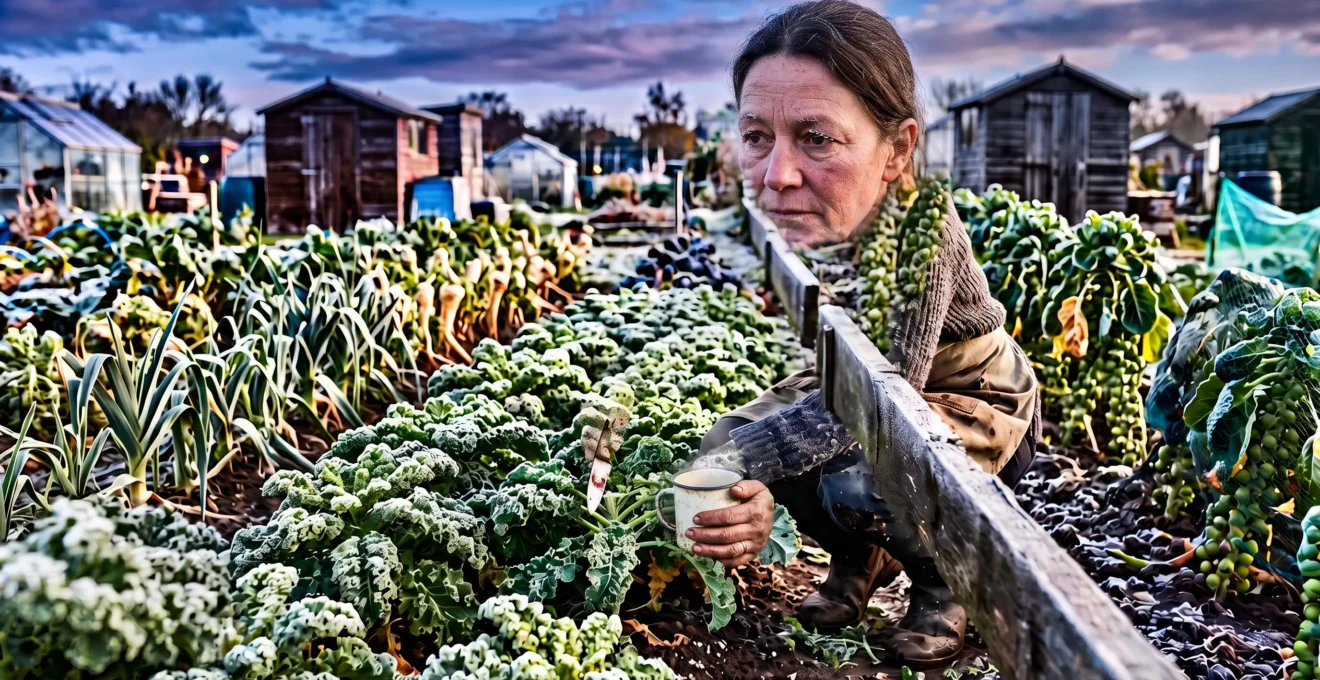
Reliable vegetable harvests in the UK do not have to stop when summer ends. Kale, parsnips, Brussels sprouts, leeks, spinach and broad beans can extend the productive season because they tolerate cooler growing conditions better than many traditional summer crops. The key is not simply choosing hardy vegetables: it is matching varieties, sowing dates and protection to the conditions in your garden.
Spring and autumn require different decisions. In spring, increasing daylight and rising temperatures can cause leafy vegetables to bolt before they reach a useful size. In autumn, sowing too late can leave seedlings insufficiently developed before winter growth slows. Some crops also improve in flavour after frost, while others merely survive it.
A productive cool-weather garden therefore depends on three principles: select crops suited to the season, establish plants early enough to develop properly, and avoid protecting them so heavily that they never adapt to outdoor conditions. With succession sowing and sensible harvesting, the shoulder seasons can provide a substantial supply of fresh vegetables beyond the summer peak.
Cool-weather vegetable growing: the essentials
- Choose genuinely cold-tolerant crops such as kale, parsnips, Brussels sprouts, leeks and suitable broad bean varieties for extended seasonal harvests.
- Match lettuce and spinach varieties to changing spring daylight, using succession sowing to reduce the risk of losing an entire crop to bolting.
- Plan autumn sowings around the remaining growing conditions, harden off indoor-raised seedlings and use fleece or cloches selectively.
- Why Do Kale, Parsnips, and Brussels Sprouts Taste Sweeter After Frost?
- How to Choose Spring Lettuce and Spinach Varieties That Won’t Bolt in May?
- Should You Sow Broad Beans in Spring or Autumn for Earliest Harvests?
- The Overprotection Mistake That Makes Hardy Cool-Weather Vegetables Less Cold-Tolerant
- When Should You Sow Hardy Cool-Weather Vegetables for Harvest Before Midwinter Growth Halt?
- Why Should You Harvest Fresh Produce in Early Morning Rather Than Midday or Evening?
- Heat-Tolerant vs Traditional Varieties: Which Tomatoes and Lettuce Cope Best with UK Heatwaves?
- Why Does Fresh Produce Harvested at Peak Ripeness Contain 40% More Nutrients Than Shop-Bought?
Why Do Kale, Parsnips, and Brussels Sprouts Taste Sweeter After Frost?
Parsnips can develop a sweeter flavour after frost because exposure to cold initiates the conversion of stored starches into sugars. This is a documented feature of parsnip cultivation in the UK, although the precise response varies with growing conditions. Kale, Brussels sprouts and leeks are also valuable winter crops, but the available evidence does not establish that every one of them follows exactly the same biochemical process or requires the same frost exposure.
The distinction matters when deciding what to leave in the ground. The RHS confirms that frost improves the flavour of parsnips, making them a particularly useful crop for winter harvesting. Its guidance also explains that parsnips and Hamburg parsley can remain in the ground and be lifted when needed. This turns the arrival of colder weather into a potential flavour advantage rather than an automatic signal to clear the vegetable bed.
However, surviving frost and improving after frost are different characteristics. Kale and Brussels sprouts are established cool-season choices for winter production, while leeks can also provide harvests during colder months. The specific flavour response should not be assumed to be identical across these vegetables. For parsnips, tasting a sample root provides a more useful indication than relying exclusively on a particular date.
There is also a practical limit to leaving roots outdoors. The RHS advises against keeping root vegetables in the ground throughout winter on wet soils because of their vulnerability to cold damage. Waterlogged conditions can make prolonged storage less attractive, even when flavour has improved. In suitable conditions, parsnips can be stored until the following spring, but this does not mean every garden has suitable soil for leaving them undisturbed.
For gardeners in mild parts of the UK, frost exposure may be limited or delayed. A test harvest is therefore a better decision-making tool than assuming that a particular number of frosty nights guarantees maximum sweetness. Harvest according to flavour, soil condition and the practical risk of leaving roots outdoors.
For a crop-specific explanation of winter harvesting and storage, consult the RHS advice on storing root vegetables.
Practical distinction: use frost as a potential flavour benefit for parsnips, but use cold tolerance and harvest availability as separate criteria when planning kale, Brussels sprouts and leeks.
Once the winter harvest is organised, spring planning becomes the next priority. Leafy vegetables introduce a different challenge: they may tolerate cool weather but can flower prematurely as daylight increases.
How to Choose Spring Lettuce and Spinach Varieties That Won’t Bolt in May?
Choose lettuce and spinach varieties described as slow to bolt or suitable for spring sowing, and match their recommended sowing period to the harvest window. These crops respond to increasing day length, so even a healthy plant can start flowering before producing the expected quantity of leaves. Succession sowing reduces the risk of losing the entire spring supply at once.
Bolting is the premature development of a flowering stem. Once a lettuce or spinach plant begins flowering, leaf quality and usefulness can decline. The Royal Horticultural Society identifies both crops as long-day annual plants: increasing daylight can initiate flowering as spring progresses towards summer.
This explains why selecting a variety without considering sowing time is unreliable. A cultivar that performs well during cooler early-spring conditions may struggle when longer days and environmental stress arrive. The RHS also identifies changing day length and environmental stress as factors encouraging premature flowering in susceptible vegetables.
When reading seed catalogues, look for descriptions such as:
- Slow to bolt: a useful indication that the variety has been selected for reduced premature flowering.
- Spring-sown: a recommendation that helps identify the intended seasonal growing window.
- Hardy: a useful description for tolerance of cooler growing conditions, although it does not automatically guarantee bolting resistance.
- Overwintering: a description associated with growing through colder periods, rather than proof of suitability for every spring harvest window.
These descriptions should be considered alongside the actual sowing instructions on the seed packet. A hardy variety is not necessarily slow to bolt, and a slow-bolting variety is not necessarily suitable for winter exposure. The two characteristics answer different gardening questions.
Another useful distinction is eating quality. A variety selected for reliability across a longer growing period may not necessarily offer the same texture or growth speed as one selected primarily for tender leaves. The available RHS evidence does not establish a universal trade-off between overwintering varieties and leaf texture, so comparisons should be made using specific cultivar descriptions rather than general assumptions.
Monitor plants for an elongating central stem. This is an early warning that flowering may be approaching. Rather than waiting for every plant to mature together, sow smaller batches successively. The RHS recommends successive sowing as a way of maintaining a continuous supply when growing conditions vary.
For fast-maturing crops, its seed-sowing guidance gives a practical interval of 10–14 days between successive batches. This is a general recommendation, not a fixed interval for every lettuce or spinach variety.
Read the RHS guidance on bolting in vegetables to understand how increasing daylight influences premature flowering.
Once spring leaves are established, broad beans offer another way to bring the first substantial harvests forward. Their sowing strategy is different because winter survival and plot exposure influence the choice.
Should You Sow Broad Beans in Spring or Autumn for Earliest Harvests?
Autumn sowing is generally the strategy to consider when the priority is an earlier broad bean harvest in the following year. Hardy varieties such as Aquadulce are recommended for November sowing by the RHS. However, exposed or wet gardens may be better suited to late-winter indoor sowing, so the earliest possible planting date is not automatically the most reliable option.
Broad beans offer flexibility because they can be established in different seasons. The decision should reflect the conditions of the growing site, the variety and the desired harvest period.
| Decision factor | Autumn sowing | Spring sowing |
|---|---|---|
| Harvest objective | Potentially earlier harvest the following year | Later seasonal harvest |
| Variety selection | Choose hardy types such as Aquadulce | Quick-maturing types can be appropriate |
| Site suitability | Less suitable for very wet or exposed plots | Useful alternative where winter establishment is unreliable |
| Alternative establishment | Direct sowing in suitable autumn conditions | Indoor sowing in pots or modules in late winter |
| Important limitation | Winter conditions can compromise establishment | Later sowing can reduce cropping potential |
The RHS identifies Aquadulce as a notably hardy cultivar for November sowing. This makes it a useful starting point for gardeners seeking early crops. The advantage comes from establishing plants before the following spring’s sowings, not from assuming that every autumn-sown variety will survive every winter.
For gardens exposed to strong winds or persistent wet conditions, the RHS recommends an alternative: a quick-maturing variety such as Monica can be started indoors in February. This provides a useful middle ground between autumn establishment and waiting until spring conditions are fully established outdoors.
There is no requirement for broad beans to experience winter cold in order to flower. This is important because it prevents a common misunderstanding: autumn sowing is a practical way to bring production forward, not a compulsory biological requirement for flowering.
Early crops also require attention after sowing. The RHS notes that broad beans are commonly affected by blackfly, although its guidance does not quantify a greater infestation risk for autumn-sown plants. Regular inspection is sensible, particularly as plants develop and conditions become more favourable to pests.
Wind exposure is another practical consideration when choosing the planting position. Establishing a crop earlier does not remove the need to assess soil condition and provide suitable support where plants are exposed.
For the detailed seasonal comparison and cultivar recommendations, consult the RHS guidance on autumn and spring broad bean sowing.
Whatever the chosen sowing period, young plants need to become accustomed to outdoor conditions. This is particularly important when seedlings have been raised indoors or under protection.
The Overprotection Mistake That Makes Hardy Cool-Weather Vegetables Less Cold-Tolerant
Protecting every seedling continuously can create a false sense of security. Plants raised indoors need to become accustomed to outdoor temperatures, wind and changing conditions before transplanting. The RHS recommends a gradual hardening-off period of approximately 10–14 days for indoor-raised seedlings. Protection is useful during establishment, but it should not replace the process of acclimatisation.
Hardening off means progressively increasing a seedling’s exposure to outdoor conditions. A plant raised in a sheltered indoor environment experiences a different growing environment from one established directly outdoors. Moving an indoor-raised seedling straight into a cold, exposed bed can therefore create unnecessary stress.
The RHS recommends starting with a warm, sheltered outdoor position during suitable weather. Seedlings can initially be brought indoors at night before being exposed for longer periods. The purpose is to introduce outdoor conditions progressively rather than making an abrupt transition.
The distinction between useful protection and excessive protection is important. Fleece and cloches can help warm the soil and protect young crops during early establishment. They are not inherently harmful, and the RHS specifically identifies them as useful protective materials.
The problem arises when gardeners treat permanent covering as a substitute for assessing conditions. A cover that is useful during a particularly cold spell may be unnecessary during milder weather. Keeping crops covered without considering ventilation, humidity and pest pressure can also complicate routine inspection and management.
Direct-sown crops and indoor-raised seedlings should not be managed identically. Plants established outdoors from seed have already developed in their growing environment. Indoor-raised plants need the additional transition before transplanting. The RHS recommendation of 10–14 days applies to the latter and should be treated as a general guide rather than a guarantee of frost resistance.
Use the following approach:
- Start indoor-raised seedlings in a sheltered outdoor position during suitable weather.
- Bring them indoors at night initially, as recommended by the RHS.
- Gradually increase outdoor exposure before transplanting.
- Use fleece or cloches when conditions justify additional protection.
- Assess individual crop and weather conditions instead of leaving every plant permanently covered.
A practical hardening-off and protection checklist
- Identify which seedlings were raised indoors and record them separately from direct-sown crops.
- Set a hardening-off start date and a 10–14-day transition period for indoor-raised seedlings.
- Record the initial sheltered outdoor exposure and the periods when plants are brought indoors at night.
- Check the weather forecast and identify the periods when fleece or cloches are justified.
- Complete a transplanting record showing the planting date and which seedlings have completed the gradual transition.
For the practical seedling establishment procedure, follow the RHS advice on vegetable seed-sowing techniques.
Once seedlings are ready to face outdoor conditions, the remaining question is whether they have enough growing time to establish before winter slows development.
When Should You Sow Hardy Cool-Weather Vegetables for Harvest Before Midwinter Growth Halt?
The right sowing date depends on how much useful growing time remains before winter conditions slow development. A fixed calendar date cannot suit every UK garden because regional temperatures, daylight and exposure differ. The practical approach is to plan backwards from the expected slowdown in growth and allow each crop sufficient time to establish before that point.
Two different objectives are often confused when planning autumn vegetables. The first is to harvest a crop before midwinter conditions restrict further growth. The second is to establish an overwintering crop that remains in the garden through winter and resumes development when conditions improve.
These objectives require different decisions. A crop intended for an autumn harvest needs to reach a useful harvestable stage before growth slows significantly. An overwintering crop needs to establish sufficiently well to withstand the colder period, even if substantial growth does not continue throughout winter.
Day length and temperature both influence vegetable development. As autumn progresses, reduced daylight and cooler conditions limit the time available for growth. This makes late sowing increasingly risky, particularly when seedlings remain small as winter approaches.
Instead of following a generic sowing calendar, build a local timetable for each crop group:
- Root vegetables: distinguish crops intended for autumn lifting from those that can remain in the ground for winter harvesting.
- Brassicas: allow sufficient establishment time for winter crops such as kale and Brussels sprouts.
- Alliums: select varieties and sowing periods appropriate to the intended winter or spring harvest.
- Leafy vegetables: plan successive sowings around the available daylight and the crop’s expected development rate.
A useful starting point is to identify the conditions in which growth becomes noticeably slower in your own garden. A sheltered southern plot and an exposed northern garden should not automatically follow identical dates. Soil temperature is also relevant: the RHS notes that most vegetable seeds will not germinate below approximately 7°C soil temperature, although individual crop requirements differ.
For autumn sowing, the common mistake is waiting until the season already feels cold before starting everything. Small seedlings may then have insufficient time to develop before winter. Conversely, sowing too early can produce crops that reach maturity outside the intended harvest window.
The most reliable method is to record sowing dates, emergence, establishment and harvest for each crop. After one growing cycle, these observations become a more useful guide for your own microclimate than a generic calendar.
For an overwintering crop, assess whether plants have established adequately before the seasonal slowdown. Do not confuse an established crop that pauses during winter with one that was sown so late that it never developed sufficiently.
Planning the growing season is only part of the equation. The time at which vegetables are harvested can also influence their freshness, texture and storage performance.
Key decisions before the final harvest considerations
- Plan autumn sowing according to the remaining growing conditions, not simply the month on the calendar.
- Separate crops intended for pre-winter harvesting from those intended to survive winter and resume growth later.
- Use successive sowings and local growing records to improve the timing of future crops.
Why Should You Harvest Fresh Produce in Early Morning Rather Than Midday or Evening?
Early morning is generally a good time to harvest leafy vegetables because plants have had the night to recover from daytime water loss. Leaves can be firmer and less wilted before exposure to the stronger sun and higher temperatures of the day. This is particularly useful for lettuce, spinach and kale, where leaf condition directly affects eating quality and short-term storage.
During the day, sunlight and warmth increase water loss through the leaves. When the rate of water loss exceeds the plant’s ability to replace it, leaves can lose firmness. Overnight, cooler conditions and reduced transpiration give plants an opportunity to recover some of that lost water.
This is why a morning harvest is particularly attractive for salad crops. Freshly picked lettuce and spinach can be easier to handle and store when they have not already experienced substantial daytime wilting.
The difference is not equally important for every vegetable. A gardener with limited time should prioritise leafy crops rather than treating early harvesting as an absolute rule.
| Crop | Priority for morning harvesting | Practical reason |
|---|---|---|
| Lettuce | High | Leaf firmness and freshness are important. |
| Spinach | High | Leaves can lose firmness during warmer conditions. |
| Kale | High | Fresh leaves benefit from harvesting before daytime heat. |
| Parsnips | Lower | Root harvesting is less dependent on leaf turgor. |
| Brussels sprouts | Lower | Harvest timing is generally more flexible than for salad leaves. |
Morning harvesting is particularly useful when growing vegetables to bridge the seasonal gap between summer abundance and winter production. A crop harvested in good condition is easier to prepare and store than one that has already wilted in the sun.
However, harvest timing is only one part of post-harvest quality. Remove damaged leaves, avoid unnecessary handling and refrigerate suitable produce promptly. For leafy vegetables intended for later meals, minimise the time between harvesting and storage.
There is also no need to abandon a harvest simply because early morning is inconvenient. If the weather is cool and overcast, the difference may be less significant. For roots and Brussels sprouts, soil condition, crop maturity and practical access are often more important considerations than the exact hour.
Frost-affected crops should also be judged individually. Parsnips may develop improved flavour after frost, but the RHS evidence does not establish a universal rule that every frost-sweetened vegetable reaches maximum sugar concentration at a particular morning harvesting time.
Cool-season growing does not eliminate the summer challenge. When temperatures rise unexpectedly, lettuce and tomatoes can experience different forms of heat-related production stress.
Heat-Tolerant vs Traditional Varieties: Which Tomatoes and Lettuce Cope Best with UK Heatwaves?
Heat-tolerant varieties can help protect summer production, but lettuce and tomatoes need to be assessed against different problems. Lettuce may bolt prematurely under longer days and stressful growing conditions, while tomatoes can experience problems with flowering and fruit development during excessive heat. A variety described as heat-tolerant should therefore be evaluated for the specific failure it is intended to reduce.
This section complements the cool-weather strategy rather than replacing it. A garden that produces reliable spring and autumn vegetables can still experience a summer gap if traditional varieties struggle during hot periods. Choosing suitable varieties for both ends of the season makes continuous production more realistic.
For lettuce, bolting resistance is a particularly important selection criterion. Increasing day length can initiate flowering in long-day crops, including lettuce. Environmental stress can also encourage premature bolting. A heat-tolerant description should therefore be checked against the variety’s actual bolting characteristics rather than interpreted as a guarantee of performance in every hot spell.
Tomatoes require a different assessment. Their main concern during extreme heat is reproductive performance, including flower retention and successful fruit development. A variety that grows vigorously in warm conditions is not automatically one that maintains good fruit set under heat stress.
When comparing seed descriptions and trial information, consider the following:
- Lettuce: look for specific information about bolting resistance and the recommended growing season.
- Tomatoes: look for evidence relating to flowering, fruit set and performance in warmer conditions.
- Trial evidence: distinguish documented results from broad marketing descriptions.
- Growing window: check whether a variety is intended for spring, summer or autumn production.
- Cold tolerance: verify separately rather than assuming that heat tolerance also means suitability for cool weather.
One important trade-off is that a variety selected for summer performance may not be the best choice for early spring or autumn. A heat-tolerant lettuce cultivar is not automatically hardy enough for colder conditions. This makes it sensible to maintain separate variety choices for different parts of the growing season.
For gardeners with limited space, the aim is not to grow every crop all year round. It is to choose varieties that cover the periods when they are most likely to perform reliably. Spring and autumn varieties can provide the main cool-weather supply, while heat-adapted choices help maintain summer production.
Be cautious about interpreting an award or a catalogue description as proof of heat tolerance. Recognition for general garden performance does not necessarily demonstrate resistance to a specific heat-related problem. Where available, seek trial information that directly addresses the crop’s relevant performance characteristic.
Once the right varieties have been chosen, the final advantage of growing vegetables at home is the opportunity to harvest them when they are ready to eat rather than when transport and retail schedules permit.
Why Does Fresh Produce Harvested at Peak Ripeness Contain 40% More Nutrients Than Shop-Bought?
Home-grown vegetables harvested at peak ripeness can offer nutritional and freshness advantages because they can be picked close to the moment of consumption. However, the 40% figure should be treated as an indicative headline rather than a universal scientific result. Nutrient differences depend on the crop, the nutrient being measured, maturity at harvest and the time and conditions between harvesting and eating.
One important factor is the stage at which produce is harvested. Vegetables left to develop appropriately on the plant can accumulate nutrients during growth. Produce harvested earlier for transport and retail distribution may have a different nutritional profile, depending on the crop and its maturity.
The second factor is what happens after harvesting. Nutrient concentrations can change during storage and transport. Vitamin C is particularly susceptible to degradation, although the rate varies according to the vegetable, temperature, storage conditions and elapsed time.
This creates an opportunity for gardeners growing cool-weather crops. A spinach plant harvested shortly before lunch has a much shorter journey from garden to plate than a bag of spinach that has passed through harvesting, packing, transport and retail storage. The difference is particularly relevant during the cooler months, when fresh local produce can be less readily available.
However, home-grown vegetables are not automatically more nutritious in every comparison. A well-handled shop-bought vegetable can retain substantial nutritional value, while a home-grown crop stored for too long can lose some of its freshness advantage.
The key is to make the most of the short distance between garden and kitchen:
- Harvest only the quantity needed for the next meal whenever practical.
- Choose produce at an appropriate stage of maturity.
- Remove damaged or deteriorating leaves before storage.
- Keep perishable leafy vegetables cool after harvesting.
- Minimise unnecessary storage time and prepare produce promptly.
For winter gardeners, this reinforces the value of crops such as kale, spinach and leeks. These vegetables can extend the availability of fresh produce beyond the summer season, reducing the need to rely exclusively on vegetables transported from distant growing regions.
The nutritional advantage should nevertheless be assessed realistically. The exact difference between home-grown and shop-bought vegetables cannot be established from the available RHS sources, and no universal 40% improvement can be guaranteed for every crop or nutrient.
The more defensible conclusion is that harvesting close to consumption and storing produce carefully can help preserve freshness and reduce the time available for post-harvest deterioration.
For a more reliable year-round supply, combine hardy spring and autumn varieties, appropriately timed sowings and regular small harvests. The best results come from observing how crops perform in your own garden and adjusting the following season’s planting decisions accordingly.
Which vegetables are best for growing outdoors during a UK winter?
Kale, Brussels sprouts, leeks and parsnips are useful choices for extending harvests into winter. Their suitability depends on variety, soil conditions and local exposure. Parsnips can be left in the ground for harvesting when required, although the RHS advises against leaving root vegetables in wet winter soil.
Can lettuce and spinach grow outdoors in early spring?
Yes. Choose varieties suited to spring sowing and monitor increasing daylight as the season progresses. Lettuce and spinach are long-day plants, and increasing day length can initiate flowering. Succession sowing helps maintain a supply when individual batches bolt prematurely.
Is autumn sowing always better than spring sowing for broad beans?
No. Autumn sowing with a hardy variety such as Aquadulce can bring forward the following year’s harvest. However, exposed or wet plots may be better suited to starting a quick-maturing variety such as Monica indoors in February. The best option depends on the growing site.
How long should vegetable seedlings be hardened off before planting outside?
The RHS recommends approximately 10–14 days for indoor-raised seedlings. Begin with sheltered outdoor exposure during suitable weather, initially bringing plants indoors at night, and gradually increase the time they spend outside before transplanting.
Can hardy vegetables be grown without a greenhouse or polytunnel?
Yes. Many cool-weather vegetables can be grown outdoors in suitable soil and conditions. Direct sowing, appropriate variety selection and careful seasonal planning are more important than having a greenhouse. Fleece and cloches can provide additional protection when required, particularly during early establishment.