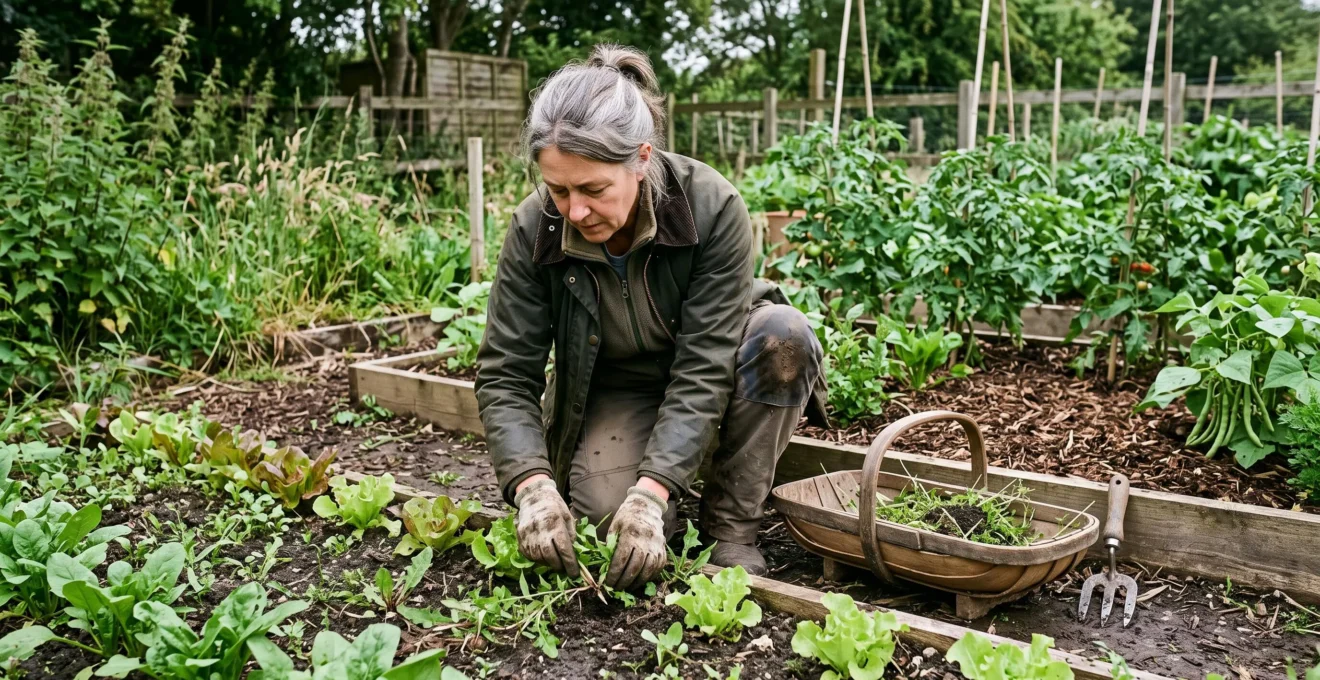
A healthy, productive garden does not require constant attention or perfectly tidy borders. It requires a reliable approach to the tasks that prevent lasting damage: watering plants while they establish, controlling weeds before they spread, pruning according to flowering habits and protecting soil and wildlife. Other jobs, including cutting back every perennial, removing every fallen leaf and maintaining immaculate edges, are often optional.
The difficulty is knowing which jobs can wait and which become more expensive or damaging when neglected. The answer depends on plant type, local weather, soil conditions and the consequences of missing a particular window. A newly planted tree, for example, needs different attention from an established shrub.
For UK gardeners with limited time, the most effective strategy is **prioritising plant health over appearance**. Short inspections, timely interventions and selective seasonal work can prevent many problems without turning gardening into a daily obligation.
The essentials of effective garden maintenance
- Remove competitive weeds before they flower and spread seeds; tackle persistent perennial roots carefully.
- Prioritise watering newly planted plants and respond to actual soil and weather conditions rather than a rigid schedule.
- Prune according to flowering and growth habits, while retaining healthy autumn vegetation that supports wildlife.
- Why Does Delaying Weeding by Just Two Weeks Turn a 20-Minute Job Into a 4-Hour Battle?
- How to Build a Garden Maintenance Calendar That Ensures No Critical Task Gets Missed?
- Should You Spend 30 Minutes Daily or 3 Hours Weekly on Garden Maintenance for Best Results?
- The Maintenance Timing Error That Removes Next Year’s Flowers or Weakens Tree Health
- What’s the Absolute Minimum Garden Maintenance Required to Prevent Decline and Loss?
- What’s the Absolute Minimum Garden Maintenance Required to Prevent Decline and Loss?
- How to Conduct Early Spring Garden Cleanup Without Damaging Emerging Perennials?
- Which Autumn Garden Cleanup Tasks Are Essential Versus Those That Harm Overwintering Wildlife?
Why Does Delaying Weeding by Just Two Weeks Turn a 20-Minute Job Into a 4-Hour Battle?
Delaying weeding can make a small job substantially harder because unwanted plants continue growing, competing for water, nutrients and light, and may produce seeds. However, the precise comparison between 20 minutes and four hours is not established by the available horticultural evidence. The practical lesson is that **weed size, flowering stage and root structure matter more than an arbitrary two-week deadline**.
Annual weeds are generally easiest to remove while young. Their roots are relatively small, and regular hoeing during spring, preferably in dry weather, can prevent them from becoming established. Once flowering begins, seed production becomes an additional problem. Leaving mature weeds in place allows unwanted plants to spread into neighbouring beds.
Perennial weeds require a different approach. Bindweed and couch grass can regenerate from root fragments, so simply pulling off the visible growth may leave the problem unresolved. Removing as much of the root system as possible is important, although the appropriate method depends on the species and its growth habit.
The RHS guidance on efficient garden-bed weeding explains why flowering weeds and persistent perennial roots deserve particular attention.
Weed pressure also reveals something about the condition of a bed. Extensive growth across exposed soil can indicate that ground coverage is insufficient. Once weeds have been removed, **mulching or establishing suitable ground cover** helps reduce opportunities for them to return.
For an already neglected garden, avoid trying to remove everything in one exhausting session. Prioritise:
- Weeds approaching flowering or seed production.
- Perennial weeds spreading into cultivated plants.
- Growth smothering young vegetables, seedlings or vulnerable perennials.
- Harmless ground-covering plants that can temporarily be left alone.
Once the immediate pressure is under control, the next step is to prevent the same problems from returning through a maintenance routine based on seasonal and environmental conditions.
How to Build a Garden Maintenance Calendar That Ensures No Critical Task Gets Missed?
A useful garden maintenance calendar should follow the needs of individual plants and local growing conditions rather than rely exclusively on fixed monthly instructions. Record seasonal jobs such as pruning and sowing, but also include condition-based checks triggered by soil moisture, rainfall, plant development and pest activity. This makes the calendar a practical decision tool rather than another demanding checklist.
Start by dividing the garden into manageable categories:
- Trees and shrubs: record flowering periods, establishment needs and appropriate pruning windows.
- Perennial borders: identify dormant plants, emerging growth and division opportunities.
- Vegetable beds: track sowing windows, weed pressure and watering requirements.
- Lawn and containers: monitor their particular seasonal and weather-related needs.
Next, distinguish between two types of maintenance.
**Date-triggered tasks** are associated with a predictable seasonal window. Examples include pruning spring-flowering shrubs after flowering and planning early spring perennial division.
**Condition-triggered tasks** depend on what is happening in the garden. Soil moisture, prolonged dry weather, emerging pests and new plant growth are more useful indicators than a fixed weekly appointment.
Watering illustrates why this distinction matters. The RHS advises checking actual soil moisture rather than following an automatic weekly schedule. For garden borders, it recommends checking moisture to approximately 15 cm. Newly planted trees and shrubs may need water penetrating approximately 20–30 cm around the rootball.
The RHS advice on garden watering requirements reinforces this condition-based approach. Newly planted herbaceous perennials generally need attention during their first year, while established trees, shrubs and herbaceous perennials generally need additional watering only during extreme drought.
A calendar should also rank tasks by consequence. Missing a pruning window can remove the next flowering season’s buds; missing a sowing window may mean waiting until the following suitable period. By contrast, some mulching and routine feeding can be rescheduled, depending on the plant and conditions.
Finish with a short review at the end of each month. Compare planned jobs with completed ones, move outstanding tasks to an appropriate future window and remove tasks that are no longer necessary. A missed month should prompt an adjustment, not abandonment of the whole system.
Once the priorities are visible, the remaining question is how often to work in the garden without allowing inspections and essential interventions to slip.
Should You Spend 30 Minutes Daily or 3 Hours Weekly on Garden Maintenance for Best Results?
Neither daily maintenance nor one long weekly session is automatically better. The right frequency depends on the task. Short, regular inspections help identify weeds, pests and changing watering needs before they become serious. Longer sessions are more suitable for jobs such as mowing, pruning and reorganising beds. **Consistency of observation matters more than following a fixed number of maintenance hours.**
A practical distinction is to separate inspection from intervention.
Daily or frequent checks are useful when:
- Newly planted trees, shrubs or perennials are establishing.
- Vegetable seedlings are vulnerable to competition from weeds.
- Containers dry out quickly during warm or windy weather.
- There are signs of pests, disease or unexpected plant deterioration.
Weekly sessions can accommodate tasks that benefit from being grouped together, such as mowing, removing accumulated weeds, tidying paths and carrying out appropriate pruning.
Long gaps between inspections have a hidden cost. A developing problem may remain unnoticed until weeds flower, plants experience water stress or pests become more established. A long maintenance session can then become a recovery exercise rather than routine care.
The best arrangement also depends on physical capacity, working hours and garden size. Someone with a small established ornamental garden may need very little intervention, whereas a productive vegetable plot or a collection of containers may require more frequent checks.
| Gardening constraint | Practical approach |
|—|—|
| Busy working week | Short inspections when possible, with one planned longer session |
| Large established garden | Divide inspection and maintenance between different areas |
| Vegetable garden | Check crops, weeds and moisture frequently |
| Limited physical capacity | Prioritise essential interventions and divide heavier jobs into smaller sessions |
| Newly planted garden | Give establishment watering and plant condition priority |
Avoid allowing the weekly session to become a permanent attempt to recover from neglect. If most of the available time is spent undoing accumulated problems, the routine needs to change.
Frequency is only one part of effective maintenance. For some jobs, choosing the wrong season can be more damaging than delaying them by a few days.
The Maintenance Timing Error That Removes Next Year’s Flowers or Weakens Tree Health
One of the most consequential gardening mistakes is pruning a flowering shrub at the wrong time. Some shrubs form their flower buds on growth produced during the previous year. Cutting these stems during autumn or winter can therefore remove the flowers expected the following spring. Other shrubs flower on new growth and are generally pruned while dormant in late winter or early spring.
The difference between **old wood and new wood** is essential to understanding pruning timing.
Spring-flowering shrubs such as lilacs and forsythias produce flowers on old wood. Their flower buds develop during the preceding growing season. Pruning them after flowering generally protects the next display while allowing the shrub to be shaped.
Summer-flowering shrubs that flower on new growth follow a different pattern. Many can be pruned in late winter or early spring, while dormant, because their flowers develop on growth produced during the current season.
University of Illinois Extension explains these differences in its educational article, guidance on flowering shrub pruning. Its examples are useful for understanding plant biology, although seasonal timing should be adapted to UK conditions and the individual species.
| Plant category | General pruning window | Main consideration |
|—|—|—|
| Spring-flowering shrubs on old wood | Shortly after flowering | Preserve buds for the next spring |
| Summer-flowering shrubs on new growth | Late winter or early spring | Encourage flowering on current-season growth |
| Other shrubs and trees | Species-specific | Verify individual pruning requirements |
A common mistake is applying one pruning rule to every plant. A shrub’s flowering period, growth habit and species identification should determine the decision. The same principle applies to trees: guidance for ornamental flowering shrubs should not automatically be transferred to mature trees.
If a shrub has already been pruned at the wrong time, the removed buds cannot be restored. Avoid further unnecessary cutting and allow the plant to recover. Do not compensate with excessive feeding or watering; maintain appropriate care and verify the correct pruning window before the next intervention.
Tree maintenance also has a structural dimension. Removing dead, damaged or diseased branches can be important, but substantial work should be based on the tree’s condition and appropriate professional advice. The available sources do not establish one universal disease-transmission or weather-related pruning window for all tree species.
The priority is to distinguish necessary structural work from cosmetic shaping. When safety is involved, seek a qualified arborist rather than delaying essential intervention.
Correct timing protects future growth, but a garden can remain healthy without every plant receiving frequent attention. That leads to a more useful question: what is the minimum care that genuinely prevents decline?
What’s the Absolute Minimum Garden Maintenance Required to Prevent Decline and Loss?
The absolute minimum is not a perfectly maintained lawn or weed-free flower border. It is a small set of interventions that prevent avoidable plant loss, structural problems and serious deterioration. Prioritise watering during establishment and prolonged drought, controlling plants that threaten cultivated growth, and addressing dead or damaged branches where safety or plant health is concerned.
A useful distinction is between **cosmetic untidiness and structural decline**.
Cosmetic untidiness includes:
- Uneven lawn edges.
- Spent flowers and untidy foliage.
- Leaves accumulating in suitable planting areas.
- Untrimmed ornamental shapes.
These conditions do not automatically threaten garden health. Many can be left until there is more time.
Structural decline is different. Examples include a newly planted tree suffering from prolonged water shortage, perennial weeds spreading through cultivated beds, exposed soil becoming vulnerable to erosion, or damaged branches creating a safety concern.
The RHS watering guidance provides a useful basis for identifying one non-negotiable task: newly planted trees and shrubs need regular attention during dry spells in their first year. Larger specimens may require watering for up to three summers. Established plants generally have lower watering requirements, although extreme drought can change that.
When time, energy or physical capacity is limited, divide plants into three groups:
1. **Must protect:** newly planted specimens, vulnerable seedlings and plants threatened by serious damage.
2. **Can largely manage themselves:** established, suitable plants that tolerate local conditions.
3. **Can be removed or simplified:** plants that repeatedly require more attention than the garden can realistically provide.
The third category is particularly important. Maintaining a garden that is permanently beyond available time or physical capacity is not necessarily better than simplifying it. Removing unsuitable or persistently troublesome plants can create a more manageable planting scheme.
A minimum maintenance routine becomes more effective when it is supported by a quick inspection habit, allowing small problems to be identified before they become expensive or difficult to resolve.
What’s the Absolute Minimum Garden Maintenance Required to Prevent Decline and Loss?
A practical minimum-maintenance strategy should include monitoring as well as intervention. A one-hour inspection walk can help identify where the garden is beginning to deteriorate, without requiring every border, shrub or lawn to be worked on during the same visit. The objective is to recognise problems early and spend limited time where it makes the greatest difference.
Walk through the garden systematically, looking for:
- Newly planted specimens showing signs of water stress.
- Weeds spreading into cultivated plants or approaching seed production.
- Unusual leaf damage, visible pest activity or signs of disease.
- Dead, damaged or crossing branches that may require attention.
- Exposed soil, failing mulch or areas where erosion may develop.
Record the observations rather than automatically starting every possible job. A plant that looks untidy may be healthy, while a recently planted shrub that appears superficially fine may still need attention during dry weather.
The idea of doing less deliberately can be useful, but it should not be confused with allowing problems to develop. Established plants adapted to their location may need relatively little intervention. Appropriate ground cover and retained organic material can also reduce the need for repeated soil disturbance and weed control.
There is, however, an important limit to this approach. The available evidence does not demonstrate that reduced maintenance automatically makes all plants develop deeper roots or stronger structures. Plant responses depend on species, growing conditions and the type of intervention.
**Escalate attention when neglect creates secondary risks.** An unattended pest problem, inadequate establishment watering or a structurally compromised branch may require considerably more effort than the original preventive task.
### A five-step minimum-maintenance action plan
Build a garden health checklist you can actually maintain
- Inspect newly planted trees, shrubs and perennials. Deliverable: a written list of plants requiring establishment watering.
- Identify flowering weeds and persistent perennial weeds. Deliverable: a prioritised weed-removal list.
- Check trees and shrubs for dead, damaged or potentially hazardous branches. Deliverable: a list of pruning or professional-assessment requirements.
- Inspect exposed beds and existing mulch. Deliverable: a record of areas needing suitable ground cover.
- Review the condition of the garden and rank outstanding work by potential consequence. Deliverable: a short maintenance priority list for the next visit.
The aim is to preserve the garden’s capacity to recover, not to maintain an immaculate appearance every week.
Seasonal maintenance is where this selective approach becomes especially valuable. Spring cleanup, in particular, requires care because plants and beneficial insects may still be emerging from winter dormancy.
Key decisions before spring cleanup
- Do not assume every dead-looking perennial is ready to be cut back; check for emerging shoots around the crown.
- Retain suitable hollow stems and leaf litter where they provide overwintering habitat.
- Avoid working or walking on saturated soil, particularly when preparing beds for planting or division.
How to Conduct Early Spring Garden Cleanup Without Damaging Emerging Perennials?
Early spring cleanup should be gradual rather than a single intensive operation. Some perennials are already producing new shoots while others remain dormant, and beneficial insects may still be sheltering in dead stems, leaf litter and the soil surface. Removing everything immediately can damage emerging growth and destroy useful overwintering habitat.
The first step is to assess each planting area individually.
**For perennials showing new growth**, remove dead material carefully by hand. Look for emerging shoots around the crown before using secateurs or other cutting tools. Avoid damaging the growing points when clearing old leaves and stems.
**For plants that remain dormant**, more substantial cutting back may be appropriate, provided the species and its growth habit allow it. Do not assume that every plant in the same border should receive identical treatment.
Insects also influence the timing of cleanup. Hollow stems and undisturbed leaf litter can provide shelter for beneficial insects, including pollinators. Removing these materials too early may destroy habitat before insects have completed their overwintering cycle.
Soil condition is another important consideration. Spring beds can remain wet after winter rainfall. Walking repeatedly over saturated soil or digging when it is waterlogged can damage its structure through compaction. Wait until the soil is sufficiently workable before undertaking substantial preparation or cultivation.
Early spring is also a useful opportunity to review overcrowded perennial borders. Some established perennials can be divided and replanted when their growth stage and species make this appropriate. Division can renew congested planting areas while combining cleanup with productive garden maintenance.
The most effective method is therefore staged:
- Inspect the bed before cutting anything.
- Identify emerging shoots and protect their crowns.
- Remove clearly dead material selectively.
- Retain suitable insect habitat.
- Wait for workable soil before digging or dividing plants.
Once spring growth is established, the same selective principle applies in autumn: remove material that presents a genuine disease or safety concern, but do not assume that a completely cleared garden is a healthier one.
Which Autumn Garden Cleanup Tasks Are Essential Versus Those That Harm Overwintering Wildlife?
Autumn garden cleanup should be selective. Removing diseased plant material, keeping paths clear and maintaining suitable drainage are sensible priorities. Cutting back every perennial, collecting every fallen leaf and removing all seed heads are usually optional. In fact, these intensive tidy-up practices can remove food and shelter that birds, bees and other beneficial insects need during winter.
The most useful approach is to divide autumn work into three categories.
| Maintenance category | Examples | Priority |
|—|—|—|
| Essential | Removing diseased material, clearing obstructed paths and checking drainage | High |
| Optional | Cutting back healthy perennials and tidying ornamental borders | Depends on preference |
| Potentially counterproductive | Removing all seed heads, hollow stems and healthy leaf litter | Avoid unnecessary removal |
**Diseased vegetation deserves particular attention.** Plant debris affected by diseases such as powdery mildew or blight may carry problems through winter. The University of Minnesota Extension recommends removing affected material rather than leaving it in the garden.
Healthy vegetation should be treated differently. Seed heads from coneflowers, black-eyed Susans and ornamental grasses can provide food for birds. Hollow perennial stems offer shelter for native bees and other beneficial insects.
The University of Minnesota Extension guidance on autumn garden care explains why retaining healthy stems and reusing fallen leaves can support wildlife and soil protection.
Fallen leaves can also be useful. Where appropriate, they can be retained as mulch or composted, helping return organic material to the garden. The Minnesota Extension article recommends a 2–4-inch mulch layer for raised beds, but this recommendation should not be automatically applied to every planting situation.
If a tidier appearance is preferred, compromise rather than clearing everything to ground level. Leave selected healthy stems standing, retain suitable seed heads and preserve some leaf litter where it will not obstruct paths, drainage or vulnerable planting.
There is no universal temperature threshold or final cleanup date established by the available evidence. Local climate, plant species and insect activity should guide the decision.
Healthy garden maintenance is not measured by how much material is removed. It is measured by whether essential problems are addressed while the garden’s soil, plants and wildlife habitat are protected. Start with one inspection, identify the highest-priority intervention and leave the purely cosmetic jobs until there is a genuine reason to do them.
How often should a garden be maintained?
There is no universal maintenance frequency. Newly planted specimens, vegetable crops and containers may need frequent inspections, while established trees, shrubs and perennials can require relatively little intervention. Separate regular checks from longer jobs such as mowing and pruning, and adjust the routine to weather and plant needs.
Which garden maintenance tasks can safely be skipped?
Many cosmetic tasks can be postponed, including trimming every lawn edge, cutting back all healthy perennial foliage and removing every fallen leaf. However, do not postpone watering vulnerable newly planted specimens during dry conditions, controlling weeds that threaten cultivated plants or addressing genuine safety and disease problems.
Should all perennial plants be cut back before winter?
No. Healthy perennial stems and seed heads can provide winter food and shelter for wildlife. Some plants may benefit from selective cutting, but retaining suitable stems and leaf litter is often preferable to clearing every border. Remove diseased material where necessary and consider the requirements of individual plants.
What is the most important garden maintenance task for beginners?
Start by learning which plants need protection during establishment. Water newly planted trees, shrubs and perennials appropriately, monitor soil moisture and remove weeds before they spread or compete strongly with cultivated plants. These priorities provide a practical foundation before taking on more specialised pruning and seasonal tasks.
Is mulching essential for a healthy garden?
Mulching is useful but not equally essential in every situation. A suitable mulch layer can reduce water loss and suppress weeds. The RHS recommends at least 5 cm in its watering guidance. Choose a suitable material and depth for the plants and planting area, rather than applying the same treatment everywhere.