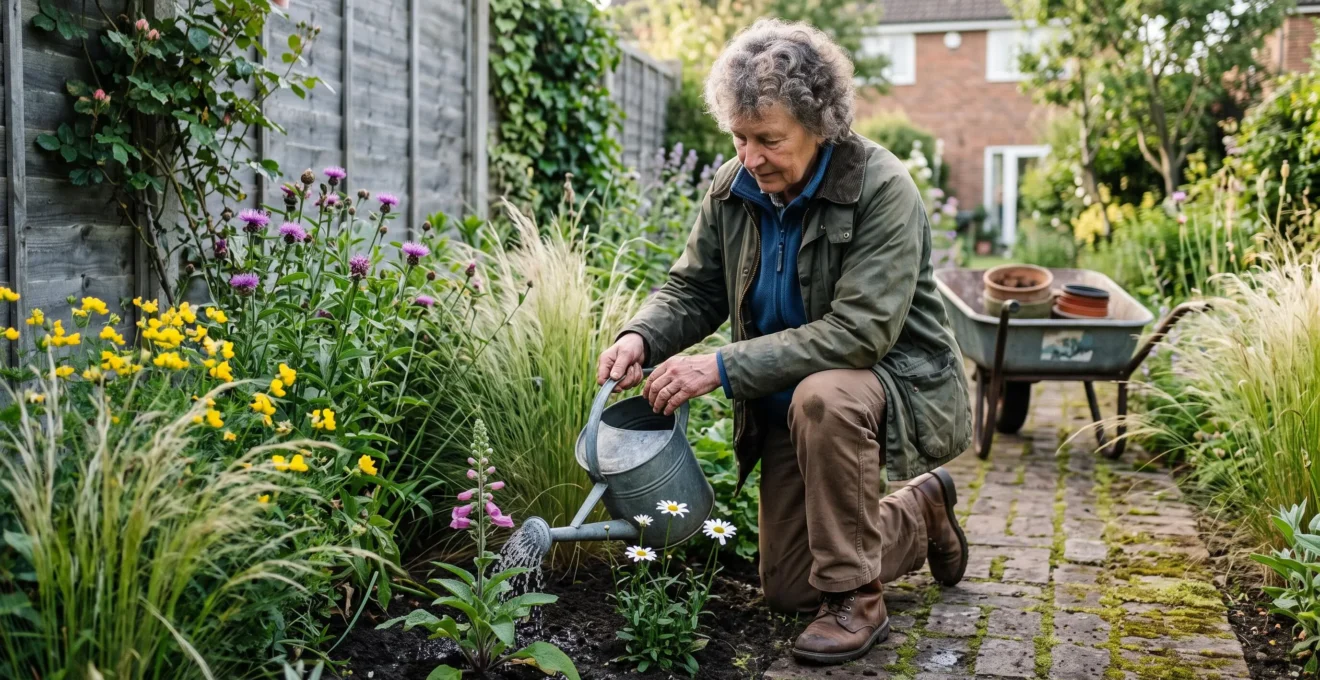
Native British plants can make gardens more resilient to unpredictable weather, but their advantages depend on choosing species adapted to the conditions of a particular site. A drought-tolerant wildflower suited to freely draining chalk may struggle in waterlogged clay, while a woodland native can suffer in an exposed, sun-baked border. Being native is therefore a useful starting point, not a guarantee of survival.
For UK gardeners facing increasingly variable rainfall, summer dry spells and sudden winter cold, the strongest approach combines appropriate species selection, locally suitable planting material and practical soil management. Established native vegetation can also provide food, shelter and breeding resources for insects and other wildlife, making a garden more ecologically connected to its surroundings.
The distinction between surviving difficult weather and requiring little intervention is especially important. Newly planted natives still need care, and some introduced species perform exceptionally well in British conditions. Understanding these differences helps create gardens that are both wildlife-friendly and genuinely manageable.
Native planting for resilient UK gardens: the essentials
- Choose plants for soil, moisture, exposure and regional conditions rather than relying on native status alone.
- Use locally appropriate wildflowers, mixed flowering seasons and suitable wildlife habitats to support more than visiting pollinators.
- Reduce long-term inputs through careful establishment, fertility management and realistic maintenance planning.
- Why Is the Definition of Native Plant Species More Complex Than Most UK Gardeners Realise?
- How to Convert a Traditional UK Lawn Into a Native Wildflower Meadow Without Complete Re-Turfing?
- Cultivated Natives vs Wild Types: Do Garden Varieties Still Support UK Pollinators Effectively?
- The Native Plant That Becomes Aggressively Invasive in Cultivated Garden Conditions
- When Should You Sow Native Plant Species to Mimic Natural Seasonal Germination Triggers?
- Native Wildflowers vs Garden Cultivars: Which Provide Better Nutrition for UK Pollinators?
- How to Create Bug Hotels, Log Piles, and Pond Edges That House Predatory Garden Wildlife?
- Why Do Native Plants Require 50% Less Maintenance Than Exotic Species in UK Gardens?
Why Is the Definition of Native Plant Species More Complex Than Most UK Gardeners Realise?
A native plant is generally one that reached a region without human introduction, but botanical classifications are more nuanced than commercial plant labels suggest. British flora includes long-established natives, ancient introductions and more recent arrivals. Regional distribution, historical evidence and seed provenance all matter when deciding whether a particular plant is appropriate for a wildlife-friendly, climate-resilient garden.
In British botanical recording, native species are distinguished from plants introduced through human activity. Archaeophytes are ancient introductions, conventionally associated with arrival before AD 1500, while neophytes are more recent introductions. These categories describe historical status, not whether a plant is attractive, hardy or beneficial to insects.
Sycamore is a useful example because its historical status in Britain has been debated, despite its familiar presence in the landscape. Foxglove, by contrast, is a recognised British native, although its wild occurrence, garden cultivation and occasional escape from planting can complicate interpretation of individual records. Neither species should be assigned a new botanical status simply because it appears in a nursery’s native-plant collection.
The Plant Atlas 2020 native-status dataset, associated with the Botanical Society of Britain and Ireland and the UK Centre for Ecology & Hydrology, provides a research-based foundation for examining these distinctions.
30 million+
Botanical records underpin Plant Atlas 2020, whose main recording period covered 2000–2019. This extensive evidence base supports research into plant distribution and native status, rather than predictions of garden performance.
Botanical Society of Britain and Ireland and UK Centre for Ecology & Hydrology, Plant Atlas 2020.
Local provenance introduces another consideration. Two populations of the same species may differ genetically or developmentally because of their geographical origins. These differences can influence flowering behaviour and responses to environmental conditions, although the available evidence does not establish a predictable frost-resistance advantage for every UK-grown seed population over continental material.
Gardeners can investigate a plant before purchasing by consulting the Botanical Society of Britain and Ireland’s recording resources and the Online Atlas of the British and Irish Flora. Check the species’ recorded status in the relevant region, then ask the supplier where its seeds were collected and propagated.
Commercial mixes deserve particular scrutiny. A packet described as British wildflowers may contain species cultivated in Britain, introduced ornamentals or annual flowers selected primarily for visual impact.
- Check whether every component is identified by its botanical name.
- Distinguish UK-origin seed from seed merely packaged or sold in the UK.
- Confirm whether the mix contains only native species.
- Check whether annuals, perennials and grasses are separately identified.
- Match the mix to the garden’s soil, light and moisture conditions.
Once a plant’s identity and origin are understood, the next challenge is creating conditions in which native vegetation can establish without being overwhelmed by existing garden plants.
How to Convert a Traditional UK Lawn Into a Native Wildflower Meadow Without Complete Re-Turfing?
An established lawn can become a native wildflower meadow without removing all its turf. The practical approach is to reduce grass competition, expose suitable areas of soil, introduce appropriate meadow species and manage cuttings carefully. Yellow rattle can help suppress vigorous grasses, but successful conversion usually requires several growing seasons rather than a single sowing.
Existing lawns already contain a functioning plant community, so conversion is primarily a competition-management problem. Dense grasses intercept light and occupy root space before newly germinated wildflowers become established. Adding seed without changing those conditions often produces disappointing results.
Soil fertility matters because nutrient-rich conditions can favour vigorous grasses. However, it would be misleading to identify nitrogen as the single proven cause of meadow failure. Fertility, soil structure, existing vegetation and management interact, and removing turf is not a requirement limited to fertile clay soils.
The RHS advice on creating wildflower meadows confirms that existing lawns can be adapted rather than automatically replaced. It also identifies yellow rattle as a useful grass-suppressing species and advises selecting seed appropriate to the site.
For a gradual conversion, the following approach gives existing meadow plants an opportunity to establish while preserving usable parts of the lawn.
- Assess the existing lawn. Record whether it is sunny, shaded, damp or freely draining, and identify any wildflowers already present.
- Reduce grass vigour. Cut the lawn short and collect the clippings. Continue removing cut material during the preparation period rather than leaving it to decompose.
- Create seed-to-soil contact. Scarify suitable patches or open small strips of turf to expose the soil surface.
- Sow an appropriate mix. Use suitable British-origin wildflower seed where possible. Yellow rattle can be introduced into short grass in late summer or autumn.
- Manage the meadow as it develops. Allow established flowers to complete their flowering and seed-setting cycles, then remove the cut material to avoid building up fertility.
Timing and expectations are equally important. Some annual species may appear in the first growing season, while perennial meadow flowers commonly need at least two years to perform well from seed. Year-two or year-three improvement is a reasonable expectation, not a guaranteed timetable.
A productive meadow does not necessarily look colourful throughout its first summer. Better indicators include surviving seedlings, increasing gaps between dominant grasses, flowering perennials and successful natural regeneration.
Chalky ground calls for species adapted to alkaline, freely draining soils, while acidic sites need a different selection. Heavily shaded lawns are better suited to shade-tolerant woodland-edge vegetation than conventional sunny meadow mixes. In compact gardens, converting strips beside paths or creating mown routes through taller vegetation can preserve access without sacrificing all the grass.
Once wildflowers become established, their form and breeding history influence which insects will benefit from them, making plant selection more important than flower colour alone.
Cultivated Natives vs Wild Types: Do Garden Varieties Still Support UK Pollinators Effectively?
Cultivated varieties of native plants can support UK pollinators, but their ecological value depends on the traits changed through breeding. Single, accessible flowers may remain useful nectar and pollen sources, while heavily doubled or sterile varieties can offer fewer resources. Wild types are a sensible starting point for wildlife planting, although individual cultivars should be assessed on their characteristics.
A wild-type plant broadly retains the flower form found in naturally occurring populations. A cultivar may be selected for compact growth, unusual foliage, a particular flower colour or increased petal number. These changes do not necessarily affect pollinators equally.
Doubling can reduce access to reproductive structures when additional petals replace or obscure stamens and nectaries. Altered flower depth can favour some insects while restricting others. Sterility may reduce pollen availability, but it should not be assumed that every cultivated or double-flowered variety is completely sterile.
The evidence is more complex than a straightforward native-versus-exotic ranking. The Royal Horticultural Society‘s four-year Plants for Bugs programme at Wisley investigated insects visiting different groups of ornamental garden plants. The RHS research findings on native and non-native plants for pollinators support combining flowering plants of different origins, with a substantial contribution from British natives and other northern-hemisphere species.
These observations do not establish that every native cultivar is more attractive than every exotic plant. Nor do counts of flower visitors establish pollen nutritional quality, successful larval development or the suitability of a plant for specialist herbivores. The available source material does not substantiate a specific joint Royal Holloway and University of Reading cultivar-comparison result, so no such finding should be attributed to those institutions.
Planting decisions become clearer when the garden’s main objective is explicit.
| Garden objective | Wild-type natives | Cultivated natives |
|---|---|---|
| Support specialist insects | Useful first choice, particularly where host-plant relationships are known | Assess altered foliage and reproductive traits before substituting |
| Provide accessible flowers | Usually retain naturally occurring floral structures | Prefer open, fertile, single flowers |
| Maintain a formal border | May need more deliberate placement or selective management | Compact selections may help maintain a controlled appearance |
| Extend flowering | Choose complementary species with different seasonal flowering periods | Some selections offer useful flowering characteristics, subject to actual insect use |
The ecological assessment should extend beyond flowers. Leaf-mining insects, caterpillars and other herbivores rely on leaves, stems and sometimes particular host species. A cultivar with substantially altered foliage may therefore have consequences that a pollinator count would miss. However, claims that most specialist insects feed exclusively on wild types require species-specific evidence.
Plant form also affects garden management: species that seem perfectly manageable in a meadow may spread aggressively when planted in fertile, regularly watered borders.
The Native Plant That Becomes Aggressively Invasive in Cultivated Garden Conditions
Creeping buttercup is a clear example of a British native that can become troublesome in cultivated gardens. Its spreading growth allows it to occupy open ground rapidly, particularly where conditions favour establishment. Other vigorous natives also need careful placement. Native status describes geographical history, not whether a plant will remain contained in a small border.
Creeping buttercup (Ranunculus repens) spreads through creeping stems that can root at their nodes. In a closely managed flowerbed, this growth habit can produce persistent competition with less vigorous ornamentals. In a larger, moist wildlife area, the same species may be much less objectionable.
Field bindweed and hedge bindweed illustrate another difficult growth strategy: their persistent underground systems make established populations challenging to remove. Horsetails, including Equisetum species, can also persist through extensive underground growth. These plants should not be grouped under a single management method simply because they spread.
Green alkanet, often abundant in British gardens, demonstrates a different problem: prolific self-seeding. Crucially, it is not a true British native, so it should not be presented as proof that native plants are inherently invasive.
In horticulture, a plant described as a thug is not necessarily an invasive non-native species in the ecological or regulatory sense. A native may dominate a cultivated bed without being an alien invasive species. The distinction matters when discussing conservation impacts and garden control.
Garden conditions can encourage vigorous growth by providing disturbed soil, nutrients, irrigation and reduced competition. Nevertheless, these factors vary by species; it would be inaccurate to suggest that natural environments always restrain aggressive native growth.
Before introducing a vigorous plant, examine its growth habit and the amount of available space.
| Growth characteristic | Potential garden problem | Practical response |
|---|---|---|
| Running stems or underground spread | Expansion into neighbouring plants | Allow sufficient space; investigate physical containment where appropriate |
| Heavy self-seeding | Seedlings appearing throughout borders | Remove unwanted seedlings and deadhead before seed dispersal where feasible |
| Vigorous growth in fertile soil | Competition with slower-growing plants | Choose a more suitable location or reduce unnecessary feeding |
| Persistent underground structures | Regrowth after superficial removal | Plan repeated control and consider complete removal from sensitive beds |
Root barriers may help contain some spreading plants, but their effectiveness depends on root depth and growth pattern. Competitive planting can also reduce opportunities for colonisation without eliminating established invasive growth. For persistent species in confined borders, removal may be more realistic than indefinite containment.
Choosing suitable species before planting prevents much of this work. Correct sowing timing then gives the selected plants a better chance to establish in the conditions they naturally encounter.
When Should You Sow Native Plant Species to Mimic Natural Seasonal Germination Triggers?
Autumn is often suitable for sowing British native wildflowers because it exposes seeds to seasonal moisture and winter temperatures. However, not all native species germinate in response to cold. Some need warmer spring conditions, while others have complex dormancy requirements. The correct sowing date depends on the species, soil conditions and supplier’s germination instructions.
Seed dormancy prevents germination until environmental conditions are favourable. For some plants, a period of moist cold helps overcome physiological dormancy. Others can germinate readily when temperature and moisture are suitable, while certain seeds need more than one seasonal change.
Cold stratification is therefore a biological process, not simply a recommendation to sow everything before winter. Likewise, calcifuge describes a plant associated with acidic conditions or an intolerance of calcareous soils; it is not itself a seed-dormancy category. Soil preference and germination requirements should be considered separately.
The RHS identifies March or April and September as common sowing periods for many wildflower meadow mixes, depending on species and supplier advice. Spring sowing can be preferable where heavy soils remain cold and wet over winter.
For individual species, check the supplier’s germination notes rather than following a generic mixed-seed calendar. Terms commonly worth investigating include cold stratification, fresh-seed sowing, warm germination, hard seed coats and extended dormancy. Germination-code systems are not necessarily standardised across suppliers, so read the accompanying explanation.
Autumn sowing offers exposure to natural temperature fluctuations but also exposes seed to predators, displacement, winter saturation and possible frost heave. Protected trays provide more control over seed distribution and early growth, although plants will still require suitable conditions and eventual establishment outdoors.
Five checks before sowing native wildflower seeds
- Record the planting conditions: write down the site’s soil type, drainage, sunlight and exposure in a short site profile.
- Verify the species: prepare a planting list containing botanical names and available seed-origin information.
- Check dormancy instructions: create a sowing note for each species identifying whether cold treatment or another condition is specified.
- Choose the sowing method: make a simple schedule distinguishing direct autumn sowing, spring sowing and protected-tray propagation.
- Track establishment: maintain a dated germination log recording sowing, emergence and surviving seedlings before deciding whether to sow again.
Some woodland species and specialist plants have prolonged or complex germination cycles, and particular species may require more than one winter. Orchid propagation can involve specialised biological relationships, so orchids should not be treated as ordinary meadow seed or used as a universal example of double dormancy.
A lack of immediate seedlings is therefore not always evidence of failure. Nonetheless, long dormancy should only be expected where species-specific information supports it.
Once plants are flowering, the next question is not simply how many insects visit them, but what nutritional and breeding resources those insects can actually obtain.
Native Wildflowers vs Garden Cultivars: Which Provide Better Nutrition for UK Pollinators?
Wild-type native flowers can provide valuable resources for UK pollinators, especially insects with specialised relationships to particular plants. Yet native status alone does not establish superior pollen or nectar nutrition. Protein composition, sugar concentration, flower accessibility and seasonal availability vary by species. A diverse planting scheme can therefore be more effective than choosing plants exclusively by origin.
Pollinator nutrition involves more than the number of insects observed at a flower. Nectar primarily supplies energy, while pollen contributes proteins, lipids and other nutrients required by many bees, particularly for raising offspring.
Pollen composition differs among plant species. Nectar sugar concentration also varies, potentially influencing which visitors can exploit a flower. However, the supplied RHS research examines flower visitation rather than directly measuring these nutritional characteristics. Its findings should not be interpreted as proof that natives always offer higher-protein pollen.
Flower accessibility adds another dimension. Corolla depth and shape influence which insects can reach nectar or collect pollen. Some flowers suit long-tongued bees, while open blooms may be accessible to a wider range of flies, beetles and shorter-tongued visitors.
Specialist relationships are particularly important. Some mining bees, including members of the genus Andrena, show strong preferences or dependencies when collecting pollen. Supporting these insects requires identifying the relevant local bee species and providing their associated flowering plants at appropriate times.
Butterflies and moths demonstrate why adult feeding is only part of the ecological picture. Birds-foot trefoil supports larvae of certain blue butterflies, while nettles serve as larval food plants for peacock butterflies and other species. An ornamental flower providing abundant nectar does not automatically replace those host plants.
A practical planting scheme should therefore combine nutritional access and seasonal continuity.
- Use suitable wild-type native species where specialist host-plant relationships are important.
- Select open flowers with structures accessible to the intended pollinators.
- Include species that flower at different points in spring, summer and autumn.
- Consider carefully selected garden cultivars or non-native plants that extend forage availability.
- Retain suitable larval food plants as well as adult nectar sources.
The RHS Plants for Bugs guidance supports using plants from more than one geographical origin to maintain flowering resources, including appropriate exotics that can contribute in late summer. This does not establish that all non-native flowers support the same specialist insects as British wild plants.
The most useful measure is whether a planting provides complementary resources for different life stages and feeding strategies, not whether its most conspicuous flowers attract the greatest number of visitors.
Food resources are only part of a functioning garden habitat. Shelter, nesting opportunities and safe access to water are equally relevant to the insects and amphibians that occupy the surrounding landscape.
How to Create Bug Hotels, Log Piles, and Pond Edges That House Predatory Garden Wildlife?
Functional wildlife habitats should be designed around the animals expected to use them. Solitary bees need suitable nesting cavities, ground beetles benefit from sheltered ground-level refuges, and amphibians require accessible pond edges and nearby cover. A collection of decorative structures is less useful than well-positioned, maintainable habitats connected to suitable planting.
Different animals have different shelter requirements. Solitary bee nesting structures are most relevant to cavity-nesting bees, not to every beneficial insect. Ground beetles, lacewings, ladybirds, frogs and newts should not be expected to use identical accommodation.
For cavity-nesting bees, drilled holes or nesting tubes covering approximately 2–10 mm in diameter can accommodate different species, although suitable dimensions vary. Positioning a hotel in a sheltered, sunny location, often facing south-east, can help provide warmth while reducing exposure to persistent rain.
Use untreated materials and avoid rough, splintered tunnel interiors. Removable nesting components can make ongoing maintenance more practical, but occupied nests must not be disturbed simply to fulfil an annual cleaning schedule.
Parasites and pathogens can accumulate in poorly maintained artificial nesting structures. Replace spent tubes using an appropriate lifecycle-aware method, preserve occupied chambers until their inhabitants have emerged, and avoid transferring contaminated materials into new nests. A fixed instruction to remove every occupied tube once a year would be inappropriate.
Ground beetles often benefit from undisturbed shelter close to the soil. A partly shaded log pile with varied pieces of untreated timber, fallen leaves and ground contact offers a different habitat from an elevated bee hotel. Such refuges may also accommodate other invertebrates and amphibians.
Lacewings and ladybirds can use sheltered vegetation and suitable overwintering spaces. Retaining some plant stems, leaf litter and structurally varied vegetation may be more useful than relying exclusively on commercially manufactured insect hotels.
Water features add another habitat type. A pond with steep, slippery edges can trap small animals or prevent them from reaching the water. Even a modest pond becomes more accessible when its margins include safe entry and exit points.
The RHS guidance on wildlife pond design recommends at least one long, shallow, sloping side. It also describes using gravel, mud, flat stones or suitable ramps and providing vegetation around the water’s edge.
Varied depths can accommodate different aquatic plants and animals, with the RHS offering an indicative range of 20–60 cm for many wildlife ponds. An existing steep-sided pond can be improved with suitable rocks, a submerged log or a textured ramp. Fish can reduce biodiversity in ponds primarily intended for wildlife.
These habitats may attract animals that consume garden pests, including some beetles, frogs and other predators. Nevertheless, the available sources do not quantify reductions in aphids or slugs resulting from wildlife habitat construction. Predator presence is an ecological benefit, not a guaranteed biological pest-control service.
Habitat design also changes the meaning of a low-maintenance garden: allowing some vegetation and natural material to remain can reduce certain tidying tasks while introducing new responsibilities for ponds and artificial nesting structures.
What matters when assessing maintenance savings
- Measure time spent on watering, pruning, protection and control rather than assuming native status guarantees fewer tasks.
- Separate the establishment period from ongoing management; the first growing seasons may demand substantial attention.
- Compare plants in equivalent positions, because soil suitability and exposure can outweigh geographical origin.
Why Do Native Plants Require 50% Less Maintenance Than Exotic Species in UK Gardens?
Native plants do not universally require 50% less maintenance than exotic species. That figure is best treated as a hypothetical comparison rather than an established UK-wide result. Maintenance savings are plausible when well-matched native plants need less irrigation, winter protection or intervention, but poorly chosen natives can demand more work than suitable introduced alternatives.
The strongest advantage of a carefully selected native planting is its compatibility with local conditions. Plants occurring naturally in exposed, freely draining habitats may suit similarly exposed garden sites. Moisture-loving natives may perform well in damp ground where drought-adapted species struggle.
Regional adaptation can influence cold tolerance, seasonal growth and responses to weather, but a native species is not automatically resistant to every severe frost or prolonged drought. Populations also vary, and local garden conditions can differ markedly from a plant’s natural habitat.
Establishment watering remains important. Young plants have restricted root systems and may need supplementary water during dry periods regardless of origin. Once established, suitably chosen perennials may need less attention, particularly when soil structure, drainage and exposure are appropriate.
The relationship with pests is similarly nuanced. Long associations between native plants and local insects can support specialist wildlife, including herbivores. Those relationships do not establish that native species always suffer fewer pest problems or need fewer interventions.
Some natives also require ongoing management. Vigorous spreaders may need containment, meadow areas require cutting and removal of material, and individual border perennials may benefit from division or selective pruning.
Conversely, an introduced plant adapted to the same soil and climate may thrive with minimal assistance. A drought-tolerant exotic in a suitable warm, freely draining border can outperform a moisture-dependent native placed in that same location.
Rather than applying a universal percentage, gardeners can estimate their own savings by recording maintenance activities for comparable areas.
| Maintenance task | Existing planting | Proposed native planting |
|---|---|---|
| Watering | Record frequency and time during dry spells | Estimate establishment needs, then monitor actual watering requirements |
| Winter protection | Record covering, moving or insulating plants | Identify species appropriately hardy for the planting position |
| Feeding | Record fertiliser applications | Assess whether additional feeding is appropriate or unnecessary |
| Pest intervention | Record treatments, inspections and damaged plants | Monitor actual problems without assuming immunity |
| Pruning and spreading control | Record cutting, division and containment | Include meadow cuts, seed management and vigorous growth control |
For an explicitly hypothetical illustration, imagine a gardener recording 20 hours of annual maintenance in a conventional border and 10 hours in an established native alternative. The resulting reduction would be 50%, but this would describe only that imagined comparison, not an evidence-based average for UK gardens.
A meaningful assessment should also distinguish labour from water consumption and financial costs. A planting scheme may reduce irrigation while requiring more seasonal cutting, or decrease winter protection while introducing additional habitat maintenance.
Gardeners can obtain a more reliable answer by recording actual tasks over comparable seasons and noting unusual weather. The result will reflect the species, establishment stage, site and maintenance standard rather than an unsupported national benchmark.
Start with one border or lawn strip that receives regular attention, assess its soil and exposure, and select appropriate native alternatives. Record the watering, protection and cutting required during establishment and subsequent growing seasons. This measured approach offers a practical route towards a more resilient, wildlife-supporting garden without assuming every native plant is automatically easier to maintain.
Can native plants survive a severe UK drought without watering?
Some established native species can tolerate dry conditions well when planted in suitable soil, but drought tolerance varies considerably. Newly planted specimens usually need additional attention, while naturally moisture-loving natives may suffer during prolonged dry spells. Planting-site suitability matters more than native status alone.
Is it better to buy locally collected native seed or ordinary wildflower mixes?
Seed with documented, appropriate provenance can help gardeners make more informed ecological choices. Ordinary wildflower mixes may also establish successfully, but their labels should be checked for botanical names, introduced species and soil requirements. Local origin should not be treated as a guarantee of superior drought or frost performance.
Should fallen leaves and dead stems be removed from a wildlife garden?
Retaining some leaves, stems and woody material in appropriate areas can provide cover for invertebrates and other wildlife. Management should still account for access, plant health and safety. Meadow cuttings are a separate consideration because removing them can help manage fertility and grass competition.
Can a small urban garden provide meaningful habitat for native wildlife?
Yes. Small meadow patches, suitable flowering plants, sheltered log piles and accessible container ponds can provide useful resources. Their ecological value depends on habitat quality, maintenance and whether local species can reach and use them. A modest, well-planned habitat can be more useful than a larger collection of unsuitable features.
Are non-native plants always harmful in a wildlife-friendly UK garden?
No. Suitable non-native plants can provide nectar, pollen or shelter, particularly when they flower outside the main season of many native wildflowers. However, they may not replace specialist larval host plants, and potentially invasive species require careful assessment. A mixed planting strategy can complement a strong foundation of appropriate British natives.