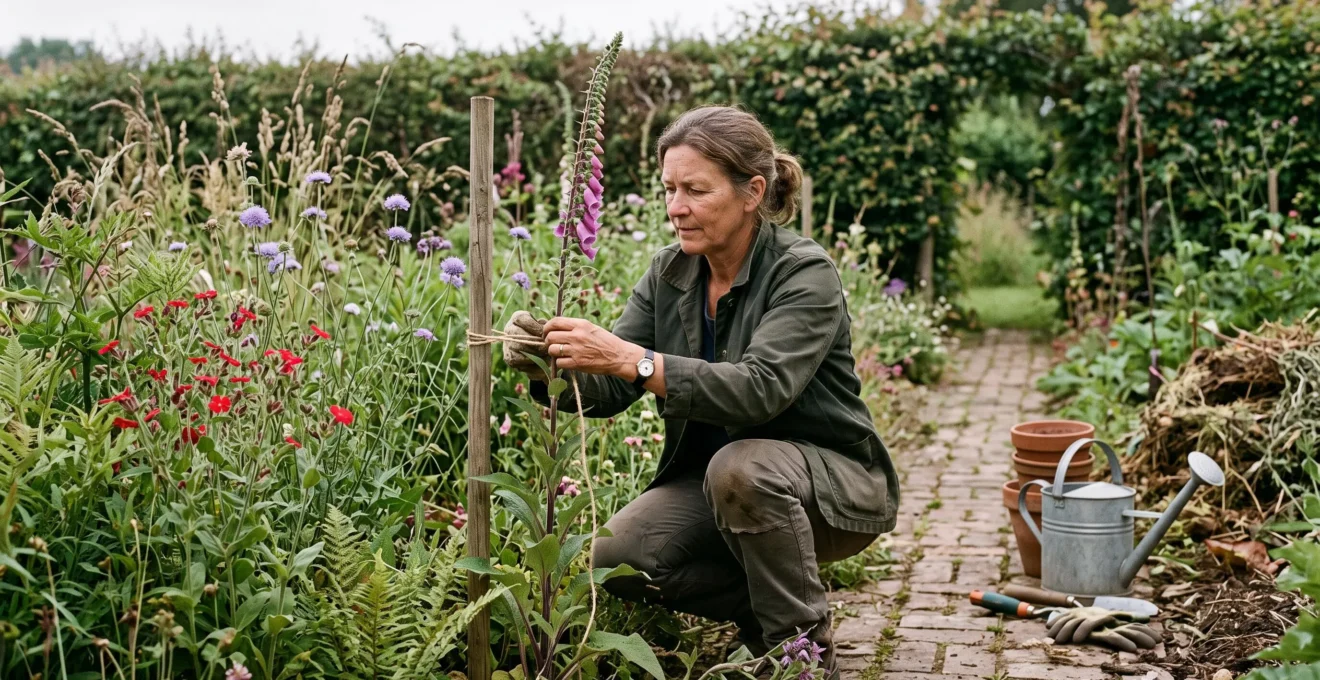
A hawthorn hedge growing comfortably in British soil may need little beyond occasional shaping once established. An ornamental shrub struggling with the same soil, rainfall and winter conditions might demand regular watering, protection or replacement. The difference often comes down to ecological suitability rather than gardening skill.
British native plants have developed within local ecosystems, making many particularly well suited to familiar seasonal patterns and wildlife relationships. Yet the claim that they require exactly 50% less maintenance than exotic species is not supported by a universal comparative study in the supplied evidence. Some native plants are demanding, while well-chosen non-native species can be remarkably easy to grow.
The practical advantage comes from choosing plants whose natural requirements match the garden, obtaining suitable planting material and establishing them at the right time. Understanding those decisions makes it possible to create attractive borders and hedges with less unnecessary intervention while providing habitat for insects, birds and other wildlife.
Native gardening: the essentials
- Native status can indicate ecological suitability, but soil, moisture, exposure and mature size determine how much care a plant actually needs.
- Check botanical identity and planting-stock provenance separately; a British native species is not necessarily grown from British-origin material.
- Plant at a suitable time, favour wildlife-accessible flowers and combine compatible natives with selected exotics where useful.
- Why Is Hawthorn Considered Native While Sycamore Is Not Despite Both Growing Wild in Britain?
- How to Find True British-Provenance Native Plants Instead of European-Sourced Lookalikes?
- Can Native Plants Match Exotic Perennials for Garden Border Colour and Structure?
- The Native Plant That Requires More Maintenance Than Exotic Alternatives in Garden Conditions
- When Should You Plant Native Species to Maximise Survival and Establishment Rates?
- Cultivated Natives vs Wild Types: Do Garden Varieties Still Support UK Pollinators Effectively?
- Native Wildflowers vs Garden Cultivars: Which Provide Better Nutrition for UK Pollinators?
- Why Do Native Plant Species Outperform Exotics in UK Gardens During Drought and Cold Snaps?
Why Is Hawthorn Considered Native While Sycamore Is Not Despite Both Growing Wild in Britain?
Hawthorn is considered native because it belongs to Britain’s naturally established flora, whereas sycamore is generally classified as introduced and subsequently naturalised. Both reproduce without gardeners’ help, but growing wild does not prove native status. The distinction concerns how a species arrived and established itself, not whether it currently survives independently.
Common hawthorn (Crataegus monogyna) belongs to Britain’s longstanding native hedgerow flora. Sycamore (Acer pseudoplatanus) is widely established across the country, yet its presence is associated with human introduction. Its precise early history is more complicated than the familiar claim that it arrived in Tudor times.
Botanists investigate plant histories using historical records, archaeological plant remains, pollen evidence and distribution patterns. Britain’s post-glacial recolonisation provides important context, but the disappearance of the land bridge to continental Europe is not an absolute botanical cut-off defining every native species.
The RHS guidance on the use of the term wildflower distinguishes native species from introduced plants that have become naturalised. It also recognises archaeophytes, plants introduced before 1500, as a separate historical category.
These distinctions matter when buying boundary plants. A naturally established species can spread vigorously without necessarily being indigenous, while a genuine native species can still become troublesome in a small garden.
For example, hawthorn can form a resilient wildlife hedge when its mature width, thorns and pruning requirements suit the boundary. Sycamore can also grow vigorously in Britain, but its mature dimensions and prolific seedlings may create substantial management work in confined spaces.
Neither species’ maintenance requirements can be inferred from origin alone. A hawthorn hedge still needs establishment watering and occasional trimming, while a well-positioned sycamore in a sufficiently large landscape may need little routine attention.
For uncertain species, consult recognised botanical records such as the Botanical Society of Britain and Ireland‘s native-status information rather than treating spontaneous growth as proof of indigenous origin.
Once botanical identity is established, the next question is whether the plant being sold comes from an appropriate geographical source.
How to Find True British-Provenance Native Plants Instead of European-Sourced Lookalikes?
To identify genuine British-provenance native plants, check both the botanical species and the geographical origin of the seed or propagation material. A plant can belong to a British native species while originating from continental European stock. Request documented origin information rather than relying on a nursery label saying simply “native”.
Consider two batches of common hawthorn. Both may carry the correct botanical name, yet one could originate from British-collected seed and the other from plants growing elsewhere in Europe. They are the same species, but not necessarily the same provenance.
For conservation planting, geographical origin can influence adaptation to local conditions, including seasonal development and frost exposure. However, British provenance is not an automatic guarantee of better performance, especially as climate conditions change.
Forest Research guidance on choosing tree provenance generally favours suitable local or regional origins for native woodland conservation while recognising that non-local material may sometimes be appropriate for climate adaptation.
This technical guidance concerns forestry rather than proving a universal advantage for every ornamental perennial in a domestic border.
When buying hedging whips, native trees or wildflower seed, ask the supplier where the original seed was collected, where the plants were propagated and whether batches remain traceable. These are different questions: a plant raised in a British nursery may still descend from imported material.
Wholesale hedging, mixed wildflower seed and large-scale planting stock deserve particular scrutiny because their supply chains can involve multiple growers. That is a reason to verify origin, not evidence that a particular supplier has mislabelled its products.
The RHS also distinguishes the immediate location of seed production from the more distant geographical ancestry of the plants producing that seed. A UK-grown seed crop does not automatically establish long-term British genetic provenance.
Five checks before buying British native planting stock
- Confirm the full botanical name and save it on the planting list.
- Request the seed or propagation-material origin and retain the supplier’s written response.
- Ask whether the stock was grown from British-collected material and record the collection region if available.
- Compare the plant’s documented habitat requirements with the garden’s soil, drainage and exposure; make a one-line suitability note.
- Keep the nursery label, batch information and purchase details together as a provenance record.
Good provenance supports an informed choice, but the eventual maintenance burden still depends on matching the plant to the particular garden.
Can Native Plants Match Exotic Perennials for Garden Border Colour and Structure?
British native plants can produce colourful, structured garden borders, provided flowering succession, foliage and winter interest are planned deliberately. Foxgloves, red campion, field scabious and guelder rose offer different seasonal effects. The main difference from many ornamental cultivars is that natives often provide successive flowering periods rather than one extended display.
A successful native border begins with the garden’s conditions rather than a catalogue of attractive flowers. Woodland-edge species suit different moisture and light levels from plants associated with open, relatively nutrient-poor grassland.
For a sunny border, field scabious can provide delicate summer flowers, while suitable native grasses contribute movement and seedheads. In partial shade, foxgloves and red campion can offer a softer woodland-edge character.
Guelder rose adds a shrub layer where soil moisture and available space are appropriate, providing seasonal flowers, autumn colour and fruit. Its mature dimensions need to be considered before planting.
The following seasonal framework helps distribute visual interest without expecting every plant to flower continuously.
| Season | Possible native planting | Design contribution |
|---|---|---|
| Spring | Primrose, wood anemone | Early flowers in suitable woodland-style conditions |
| Early summer | Red campion, foxglove | Height, colour and informal flowering layers |
| High summer | Field scabious, common knapweed | Open flowers and meadow character |
| Autumn | Native grasses, retained seedheads | Texture and structural continuity |
| Winter | Hawthorn, deciduous shrub stems, standing grasses | Branch structure and seasonal form |
Actual flowering periods vary with weather, region and growing conditions. Some plants also need several seasons to develop their intended effect.
Native planting does not eliminate garden work. Foxgloves may self-seed, vigorous perennials can require division, and nutrient-rich soil can encourage strong competitors to overwhelm smaller species.
Meadowsweet, for example, belongs in appropriately moist conditions rather than being treated as a universal low-maintenance border plant. Nettle-leaved bellflower can also need containment where it spreads beyond its allocated space.
A mixed border can be particularly effective. Carefully selected exotic perennials may extend flowering, provide distinctive foliage or fill seasonal gaps without displacing the native planting that supports local ecological relationships.
The objective is not botanical exclusivity but compatible plants performing useful roles without repeated attempts to correct unsuitable conditions.
A beautiful native border can demand relatively little intervention, but only when its species have enough space and the conditions they need.
The Native Plant That Requires More Maintenance Than Exotic Alternatives in Garden Conditions
Some British native plants require more maintenance than suitable exotic alternatives, particularly when their natural habitat does not match the garden. Meadowsweet is a useful example: it favours moist ground and can spread strongly in favourable conditions. In a dry formal border, keeping it attractive may require more watering and management than a drought-tolerant non-native perennial.
Native plants evolved within British ecosystems, not specifically for compact suburban borders, neatly edged beds or consistently dry soil beside buildings.
Meadowsweet (Filipendula ulmaria) naturally suits damp habitats. In a sunny, dry border, moisture stress can undermine its appearance, while in fertile, consistently moist ground its growth may require control.
The maintenance problem is therefore not its British origin. It is the difference between the plant’s ecological preferences and the conditions imposed by the gardener.
Other native species illustrate different problems. Birch trees can become unsuitable for restricted spaces because of their eventual size. Ash is similarly inappropriate for many small gardens, and ash dieback introduces a separate health and safety consideration.
Some native perennials may develop mildew or attract aphids under particular growing conditions. These interactions are not automatically failures: aphids, for instance, can support other garden wildlife.
Before choosing a native plant, identify its broad habitat association:
- Hedgerow: allow room for mature growth and access for occasional pruning.
- Wet meadow or streamside: provide consistently suitable moisture rather than relying on frequent emergency watering.
- Open grassland: avoid assuming that rich, heavily fertilised soil is beneficial.
- Woodland: assess shade, moisture and competition from existing tree roots.
A plant thriving in its preferred habitat generally offers better prospects for sustained flowering and wildlife value than one repeatedly struggling to survive.
That does not mean a healthy exotic automatically supports every ecological function provided by a native. It means that successful establishment is essential before either plant can deliver its potential benefits.
Choosing the right species prevents many problems; planting it at the right time further reduces the work required during establishment.
When Should You Plant Native Species to Maximise Survival and Establishment Rates?
Autumn through early spring is generally the most suitable period for planting bare-root native hedges and many trees in Britain, provided the soil is workable. Container-grown plants offer greater flexibility, but cooler, moister conditions often make establishment easier. The ideal date depends on drainage, temperature, plant type and the weather following planting.
For most trees and shrubs, the RHS recommends planting between October and April. Bare-root stock is normally handled during dormancy, while container-grown plants can be planted throughout the year when conditions allow.
The RHS advice on planting trees and shrubs explains why autumn and winter planting can reduce the watering demands associated with warmer-season planting.
During cooler months, reduced evaporative demand and available soil moisture can favour establishment. Roots may continue developing when soil temperatures permit, even though visible shoot growth has slowed.
However, saturated clay, frozen ground and exposed planting sites can make an otherwise suitable season problematic.
For bare-root hedging, protect exposed roots from drying out and plant promptly. If planting must be delayed, temporarily heel the roots into suitable soil. The RHS also advises soaking bare-root trees and shrubs for approximately 30 minutes before planting.
Plant at an appropriate depth, spread roots naturally and firm the surrounding soil sufficiently to remove large air pockets without excessive compaction. Avoid routinely adding fertiliser to the planting hole; it is not generally necessary for successful establishment.
Different seasons introduce different risks:
| Conditions | Main risk | Practical response |
|---|---|---|
| Wet winter on heavy clay | Waterlogged roots and poor soil structure | Delay planting, choose tolerant species or consider a suitable raised planting position |
| Dry spring or summer | Insufficient moisture for developing roots | Check soil moisture and water thoroughly when needed |
| Freezing conditions | Frozen soil and possible root disturbance | Avoid planting into frozen ground and check recently planted stock after thawing |
| Mild autumn | Potential drying during rainless periods | Monitor moisture rather than assuming seasonal rainfall is sufficient |
Even native plants may require watering through their first growing season and sometimes longer. Larger stock, sandy soil, dry weather and exposed sites can extend the establishment period.
Correct timing reduces avoidable work, but it does not establish a guaranteed one-season watering limit or a fixed reduction in maintenance hours.
After establishment, the next important choice is whether to favour wild-type plants or cultivated forms selected for garden performance.
Cultivated Natives vs Wild Types: Do Garden Varieties Still Support UK Pollinators Effectively?
Garden varieties of British native plants can support pollinators, but their value depends on which characteristics breeding has changed. Cultivars retaining accessible, pollen-producing flowers may remain useful, whereas heavily doubled or altered flowers can offer fewer accessible resources. Wild-type plants are a sensible starting point when ecological function is the priority.
A cultivated native is not necessarily an exotic species. It may be a selected form of a British native plant, chosen for compact growth, distinctive colour, disease tolerance or another ornamental characteristic.
Some changes affect appearance without necessarily preventing insect visits. Others alter the flower’s reproductive structures or make nectar and pollen difficult to reach.
Double flowers are an important warning sign because additional petals can replace or obstruct reproductive structures. Yet the effect varies between cultivars, so flower appearance alone cannot establish the nutritional quality of every variety.
At the nursery, compare cultivated forms with the wild-type flower. Look for accessible central structures, evidence of pollen production and a flower shape that visiting insects can physically enter.
Flower colour changes and altered flowering periods deserve consideration, but neither automatically makes a cultivar unsuitable for wildlife.
The RHS Plants for Bugs research examined how plant geographical origin affects garden invertebrates. It found ecological value in mixed plantings, although it did not directly establish that every single-flowered native cultivar performs as well as its wild-type equivalent.
Maintenance adds another dimension. Some selected forms have a more compact habit or produce fewer unwanted seedlings, potentially reducing the gardener’s work. Wild types may spread naturally and require occasional thinning.
A practical approach is to make wild-type natives the ecological foundation, then introduce carefully chosen single-flowered cultivars where they provide useful garden characteristics.
No universal planting ratio is justified by the supplied evidence. The appropriate balance depends on available space, flowering continuity, habitat quality and the species involved.
Flower accessibility is only part of pollinator support; the timing and nutritional properties of the resources also matter.
Native Wildflowers vs Garden Cultivars: Which Provide Better Nutrition for UK Pollinators?
Native wildflowers can provide important food resources for British pollinators, particularly species with specialised plant relationships. However, a native flower is not automatically more nutritious than every garden cultivar. Nectar composition, pollen quality, flower accessibility and seasonal availability all influence feeding value, and insect visits alone cannot establish nutritional superiority.
Bees use nectar principally as an energy source and pollen as a source of nutrients needed for development and reproduction. Different plants vary in what they provide, while pollinator species differ in their feeding requirements.
Some insects forage across many flower types. Others have narrower relationships with particular plants, especially when collecting pollen for their offspring.
For these specialists, replacing a suitable host flower with an attractive ornamental variety may not provide an equivalent resource, even if the replacement attracts numerous generalist visitors.
Flowering timing matters just as much as appearance. A garden with an impressive midsummer display can still provide limited food during early spring or late autumn.
Build a flowering sequence using compatible native species rather than choosing plants solely by their individual flowering duration. Early flowers, summer meadow plants and later-flowering species can complement one another where conditions suit them.
The RHS Plants for Bugs research project provides useful evidence for a mixed approach. Its experimental plantings showed that British natives performed particularly well for plant-dwelling invertebrates, while flowering plants from different geographical origins could benefit pollinating insects.
Approximately 80,000
Invertebrates counted during the RHS Plants for Bugs research, involving 36 experimental garden plots. The results concern garden biodiversity, not a measured reduction in maintenance.
Royal Horticultural Society, Plants for Bugs research project.
The research also reported approximately 10% fewer plant-dwelling invertebrates in northern-hemisphere non-native plantings and 20% fewer in southern-hemisphere plantings compared with the British native comparison. Those differences should not be interpreted as equivalent changes in pollinator nutrition.
Native plants can also support caterpillars and other herbivorous insects, which in turn provide food for birds and predators. This wider food-web role extends beyond the nectar visible to a gardener watching flowers.
For practical planting, retain native wildflowers with different flowering periods and use suitable ornamental cultivars to supplement, rather than replace, their ecological functions.
Supporting wildlife and limiting maintenance become easier when those flowering choices also tolerate the garden’s weather extremes.
Key takeaways before choosing climate-resilient plants
- Assess the actual growing conditions, especially summer soil moisture and winter drainage, before judging a plant by its origin.
- Look for recovery after difficult weather rather than assuming every damaged leaf indicates plant failure.
- Combine suitable species, appropriate provenance and well-timed planting instead of relying on a fixed maintenance-saving percentage.
Why Do Native Plant Species Outperform Exotics in UK Gardens During Drought and Cold Snaps?
Some British native plants cope well with local frost patterns and seasonal weather because their growth cycles and physiological traits suit those conditions. Yet natives do not universally outperform exotics during drought or cold snaps. A moisture-loving native may struggle in a dry border, while a suitably hardy, drought-tolerant introduced species can thrive with little intervention.
Climate adaptation involves several mechanisms. Winter dormancy can help plants tolerate cold periods, while root characteristics, leaf structure and seasonal growth patterns influence their responses to water shortage.
These characteristics differ considerably between native species. A plant associated with damp woodland does not share the same drought tolerance as one naturally occurring in dry grassland.
Likewise, exotic plants come from many climates. Some may be poorly suited to British winter wetness, while others originate from regions with conditions comparable to parts of the UK.
It is therefore misleading to assume that all Mediterranean plants fail during British winters or that every British native can withstand prolonged summer drought.
The best starting point is a site-specific climate match: compare the plant’s requirements with local minimum temperatures, drainage, summer moisture, wind exposure and available rooting space.
When evaluating plants after stressful weather, examine several signs rather than focusing on one damaged leaf. Wilting may indicate temporary water shortage, but it can also result from root damage or excessively wet soil.
Brown leaf margins and scorched foliage can reflect drought, heat, wind or other stresses. Delayed spring bud-break does not necessarily mean that a woody plant has died.
Check whether stems and buds remain viable, whether the roots are healthy and whether new growth appears when favourable conditions return. Recovery without repeated intervention is useful evidence of suitability, although a single season cannot establish long-term resilience.
After winter damage, avoid automatically removing every affected shoot before the extent of living tissue is clear. Similarly, replacing a drought-stressed plant before checking soil moisture and root conditions can lead to repeating the same mistake.
The maintenance advantage often attributed to natives is best understood as the interaction of four decisions: appropriate species selection, suitable provenance, correct establishment timing and realistic habitat matching.
Local ecological relationships can add wildlife benefits, but they do not mean native plants are universally resistant to pests or pathogens. Native plants also host the insects and organisms with which they share their ecosystems.
No evidence in the supplied sources establishes a fixed 50% saving in watering, pruning, feeding or total gardening hours. The measurable result for an individual gardener is whether the planting thrives with fewer corrective interventions over successive seasons.
Start with one garden area: record its light, drainage and summer moisture, choose a small group of compatible plants, and monitor watering, pruning and replacement needs through establishment. That provides a practical basis for creating a lower-maintenance British garden without relying on an unsupported universal percentage.
Do British native plants need fertiliser?
Many native plants do not need routine feeding when grown in suitable soil. Some wildflowers associated with nutrient-poor habitats may perform poorly under heavy fertilisation because vigorous competing plants benefit. Fertiliser is not generally necessary when planting trees and shrubs; assess the soil and species before adding nutrients.
Can native plants grow successfully in pots?
Yes, suitable native species can grow in containers, provided their mature size, rooting requirements and preferred moisture conditions are accommodated. However, pots dry out faster than open ground and may need regular watering, so container-grown natives are not automatically low-maintenance.
Are wildflower seed mixes always made from British native species?
No. Products described as wildflower mixtures may contain non-native species, and a native species may have seed sourced from outside Britain. Check the full species list and any available seed-origin information before purchasing.
Should all exotic plants be removed from a wildlife-friendly garden?
No. Suitable non-native flowering plants can complement British natives and extend the availability of resources for pollinating insects. A diverse, well-matched garden can provide ecological value without excluding every introduced ornamental species. Invasive behaviour and site suitability should still be assessed.
How can a gardener measure whether native planting actually saves maintenance time?
Keep a simple seasonal record of watering sessions, pruning time, weeding, plant losses and replacements. Compare similarly sized planting areas with comparable growing conditions, and separate establishment work from routine care after plants have settled. This provides garden-specific evidence rather than assuming a predetermined percentage saving.